This month I finished two audiobooks, two print books, and a massive stack of comic books* I borrowed from my pal, Robert.
It's possible this is one of the last posts of this kind I'll write! It's been fun trying to read as many books as humanly possible in a year, but I think I might take things at a more leisurely pace in 2020. Anyway, here are some books:
12.) Last Tango in Cyberspace by Steven Kotler: This was my one and only DNF in October, and third DNF for the year. The premise of this book sounded fun: Man whose superpower is extreme empathy gets caught up in a murder mystery. The actual book is more like: Man smokes a lot of pot and takes advantage of the amenities in his hotel room. I got a little more than halfway through this one before I had to quit. It was relentlessly stupid.
11.) My Sister, The Serial Killer by Oyinkan Braithwaite: This little story was kind of interesting. It’s about a woman whose sister inexplicably kills her boyfriends. It shows all the ways the woman enables her sister, and how she is ultimately tethered to her after covering up her crimes.
10.) Paper Girls, Vols. 3 and 4 by Brian K. Vaughan: I really enjoy time travel adventures, but I don’t know if I’ll continue with this series. Four volumes in, and I still don’t know what’s going on.
9.) Snow, Glass, Apples by Neil Gaiman: This was a retelling of Snow White, where Snow White is a vampire and everything in her kingdom is supremely messed up. Don’t read this one to your kids.
8.) Batwoman: Elegy by Greg Rucka: Unlike Paper Girls, where I felt like the story was unfolding almost intolerably slowly, “Batwoman: Elegy” was really good at telling a lot of story in a few pages. And I felt like it was complete after the one volume I read. Very dramatic, and very satisfying.
7.) The Flintstones, Vols. 1 and 2 by Mark Russell: This is a smart take on The Flintstones. It examines social institutions such as marriage and consumerism in a silly, prehistoric town. As someone who questions and overthinks almost everything we do as human beings, I found it quite enjoyable.
6.) The Nickel Boys by Colson Whitehead: This is a bleak book with a shocking twist at the end. It is a fictional story based on real events at a boarding school in Tallahassee, and it was on a “recommended reading” list Barack Obama posted on Facebook sometime a couple months ago. I would recommend it too! Thanks, Obama!
5.) Exhalation by Ted Chiang: Another Obama recommendation, this is a series of short stories from the guy who wrote “The Arrival.” Initially I thought the stories would take a much more sinister/dystopian turn, in the style of other near-future-type stories, but I found them neutral and relatively mild. I felt the narratives asked questions, but let the readers figure out the answers for themselves.
4.) The Unbeatable Squirrel Girl, Vol. 2 and 3 by Ryan North: I continue to be amused and delighted by this series. It’s upbeat and has an encouraging tone. I loved the second volume, where Squirrel Girl encounters Ratatoskr, a mischievous squirrel from Norse mythology!
3.) The Unwritten, Vols. 3-9 by Mike Carey: Initially, I really loved this series because I felt it was a good introduction for people who don’t like or don’t read graphic novels to learn to love graphic novels. In vols. 3-9, there’s still a healthy dose of literary allusions, but I feel like the story started to go off the rails a little bit. I still have two more volumes to go, and I hope it ends well for all the time and brainpower I’ve spent on it. I still love it a lot, though, don’t get me wrong.
2.) Rat Queens, Vols. 2-6 by Kurtis J. Wiebe: I’m always in the mood to enjoy this series about female friendships in a whimsical fantasy setting. I’ll be keeping an eye out for Vol. 7, which comes out early next year.
1.) The Poppy War by R.F. Kuang: The best way I can describe this book is “R-rated Final Fantasy.” This novel is gritty and brutal and makes no attempt to soften descriptions of war crimes and other atrocities. It was one of those books where you’re so invested in the characters and the plot, you get a literary hangover by the end. Alas, I think a copy of “The Dragon Republic,” the next book in the series I was supposed to review, got lost in the mail!
I’m 30 books away from reaching my goal of 200 books on the year**. Unless I finish a book every other day for the rest of the year, I probably won’t make it, but I made a valiant effort!
What was your reading goal this year? Are you going to achieve it?
*True happiness is lugging 15 pounds of comic books in your suitcase through the Orlando airport.
**Goodreads counts every graphic novel volume as a book, and I've said before that I don’t necessarily think that counts, but here we are.
Showing posts with label adventure. Show all posts
Tuesday, November 5, 2019
Tuesday, October 1, 2019
The 10+ books I read in September, ranked
September was a month for bad books! I had one DNF and two that weren’t very good. When a book puts me in a weird mood, I can’t say nice things about it.
10. “Whisper Network” by Chandler Baker: This book was on Reese Witherspoon’s book club list or something. I feel like people who don’t work an office job would find this book revelatory. For me, I got about a third of the way through it and had to DNF it. It put me in a really bad headspace where I resented everything. Yeah, I know all about the ways women struggle at work. I’m sure this book is for someone, but I didn’t need workplace gender politics in infuriating detail.
9. "Homeland" by RA Salvatore: In my fun adventure to learn more about Dungeons & Dragons (because clearly I don't have enough hobbies,) I found a spinoff novel. I read this one, and right now I’m reading “Shadowdale” by Scott Ciencin with a friend. These aren’t great books! “Homeland” was written in 1990, and I guess almost 30 years ago it was fine for the society led by dark-skinned matriarchs to be framed as evil! This story’s optics really got to me because I was reading it while I was reading another book that ended up being a little higher up on the list.
8. “The Bride Test” by Helen Hoang: I would recommend Hoang’s “The Kiss Quotient,” which I read earlier this year, but I would not read this book. The power dynamics between the heroine and the hero’s family were really unfortunate. The story follows Esme Tran, a young Vietnamese woman who is brought to the United States to be a wife for Khai Diep, an autistic man. All I could think about was human trafficking, and that’s not what you want to be thinking about when you’re trying to read a romance novel!
7. “Moon Knight” Vol. 1 by Warren Ellis and “Moon Knight” Vols. 1-3 by Jeff Lemire: I read these because a friend read and recommended them. I liked the Lemire Moon Knight better than the Ellis because Lemire wrote more of a dreamy mindscape instead of just a normal punching-bad-guys super hero. I’ve found that when you read about a super hero with a lot going on in his or her brain, the art tends to be a little more abstract and interesting.
6. “Dungeon Master’s Guide (5th edition)” AND “Mordenkainen’s Tome of Foes”: I learned how to play Dungeons & Dragons last month. I’m nowhere near competent enough to be anyone’s dungeon master, but I will say if you’re writing an adventure novel and suffering from writer’s block, the Dungeon Master’s Guide and the Tome of Foes offer some cool ideas that could be included as a bare framework of a fantasy story.
5. “The Turn of the Key” by Ruth Ware: This book is about a nanny who cares for four girls in a creepy high-tech house. One of the girls dies, and the book is written in letters from the nanny to a lawyer about what happened inside the house! I listened to this as an audiobook. I need to get a physical copy for my mom because I think she would really like it.
4. “Paper Girls” Vols. 1 and 2: I’m really enjoying this time travel saga! After two volumes, I haven’t figured out quite what’s going on yet. Good thing I have two more volumes to read!
3. “The City in the Middle of the Night” by Charlie Jane Anders: This book is a really cool scifi book I found at the library about people who live on a dying planet and are complacent and insistent in continuing how they live rather than finding ways to adapt. One of the characters befriends an alien creature that’s a cross between a crocodile, an octopus and a beetle. I would recommend this, but be warned it’s pretty weird and quite bleak.
2. “The Prince and the Dressmaker” by Jen Wang: This graphic novel is about a prince who feels more like a princess. He hires a dressmaker, Frances, to make him feel more like himself. This book was about gender identity, written for young people. It was colorful, sweet, and most importantly, respectful.
1. “Stamped from the Beginning: The Definitive History of Racist Ideas in America” by Ibram X. Kendi: Several people recommended this book to me after I expressed an interest in anti-racism work. It is a very dense 500-year history of racist ideas in America, and it took me almost all month to get through an audiobook version. My main takeaway from it is that racism is far from being a thing of the past. It is an abhorrent aspect of our society that has festered for centuries, and no amount of having black friends will get rid of the repugnant ideas that continue to mutate and evolve. The book’s title is from Jefferson Davis’ inauguration speech, when he said he believed black people were “stamped from the beginning” to be inferior to white men. This is mandatory reading for every white person. If you are reading this blog and you are white, you have to read this book now. I don’t make the rules.
Some stuff I'm reading now
“The Grace of Kings” by Ken Liu
“Shadowdale” by Scott Ciencin
“The Poppy War” by R.F. Kuang
“Where the Crawdads Sing” by Delia Owens
Road to 200
I'm at 141 books out of 200, about 8 behind where I should be if I want to achieve my goal!
Sunday, September 1, 2019
The 8 books I read in August, ranked
So, super cool of Neil Gaiman to retweet me last month. That was wild. Hello, new readers. Glad to hear you liked "The Unwritten" as much as I did! And "American Gods," of course.
Hurricane Dorian is banging down my door, and here I am writing about books. You know, the usual.
8. Shatter Me by Tahereh Mafi: This was the first book I did not finish this year because it was just so awful. It was supposed to be YA dystopian romance. The thing I find most interesting about dystopian novels is… well, the dystopia. Good or bad, I’m curious about how authors construct their dystopian society. For this one, it seemed the flimsy setting was wrapped around an even flimsier love triangle. I wasn’t into the bizarre, stream-of-consciousness whiny garbage with weird strikethrough text that's supposed to reveal the trembling inner heart of the main character. And I don’t care how pretty the covers are, they will not tempt me into reading the rest of this series.
7. Ender’s Game by Orson Scott Card: I picked away at this book for MONTHS and I had A LOT of feelings about it. I didn’t know if I would finish it, either! First, the good: I appreciated how it seemed to predict the way anonymous bots dictate the social discourse online. The bad: I felt like Valentine got the shaft when she was one of the most brilliant characters in the book. She was called upon to nudge Ender (who got chance after chance to be brilliant and failed) in the right direction like a glorified door opener. She was forced to retire her online persona at the end because of reasons. I hated the way Valentine was treated! Her story was more interesting than whatever Ender was doing! The ugly: Orson Scott Card is a raging homophobe (it’s well documented, I’m not going to Google it for you, we’re all adults) and I don’t need that regressive nonsense all up in my sci-fi, thanks.
6. Umami Bomb: 75 Vegetarian Recipes That Explode With Flavor by Raquel Pelzel: I got a copy of this cookbook on NetGalley, and the food photography is so beautiful, but I could have used some more of it! I’m eager to try some of the recipes. Meat eaters who are interested in reducing their carbon footprint through diet would enjoy this book to help transition to vegetarianism. It has a recipe for breakfast spaghetti, for crying out loud! Who wouldn't want to eat spaghetti for breakfast?
5. When Dimple Met Rishi by Sandhya Menon: This YA romance was constructed like a romantic comedy, and I really enjoyed listening to an audiobook of it. The awkwardness of young love made me giggle. Some of the parts where the heroes were teenager-petty made me cringe a bit. I was pleased it had a happy ending.
4. I Kill Giants by Joe Kelly: This graphic novel was recommended to me when I visited a comic book store in April in Philadelphia. It reminded me a lot of the movie plot of “A Monster Calls” by Patrick Ness (I want to read the book, but I haven’t yet, whoops) with a hint of “Bridge to Terabithia” by Katherine Paterson, which you know we all read and cried over around fourth grade or so.
3. The Dungeons & Dragons Player’s Handbook (5th Edition) by James Wyatt, Robert J. Schwalb and Bruce R. Cordell: I was going to write my lengthy backstory about how I’ve wanted to learn how to play D&D for more than a decade, but that’s a lot less exciting than the lengthy backstory of my very first D&D character. Since this is "Caryn's Beach Reads" and not "Caryn's Elaborately Constructed D&D Characters," we won't get into it on this blog (yet.)
2. A Cosmology of Monsters by Shaun Hamill: This is a very surprising debut book that actually comes out later this month. I read an advance copy of it, and it’s very creepy in time for fall and Halloween! If you like cosmic horror, check it out (or I’ll lend you my copy.)
1. Circe by Madeline Miller: This was the empowering story about the ancient Greek demigoddess and sorceress, Circe, who lived on one of the islands Odysseus visited in “The Odyssey.” It's an older book that I'm pretty sure everyone has read already. I'm just late to the party. I listened to the audiobook, and the woman who narrates it has a lovely speaking voice. The writing was just gorgeous. I was a little weirded out by the ending, but I appreciated some of the themes.
I’m 6 books behind my 200-book goal at this time of the year, according to Goodreads. Better step it up, Caryn, or you’ll never make your goal!
Thursday, August 1, 2019
The 6+ books I read in July, ranked
![]() |
| Step up your game, Caryn! |
Since my work is changing spaces, I've been working from home, which forces me to get out and explore my community more! I wandered into a used bookstore that's literally across the street from my house! If you follow my personal Facebook or Instagram accounts you might have seen it. Guys!!!!!!!!!!
![]() |
| !!!!!!!! |
Anyway, we're all going to promise each other to read more books in August, right? And I might write a post about how I get a lot of books for free and/or cheap. Aforementioned used bookstore sort of has something to do with it. Out of the 10 books I read last month, I paid for only 3 of them. No intellectual property law-breaking required!
5. Nine Perfect Strangers by Liane Moriarty: I waited FOREVER to get this audiobook from my library because a lot of people wanted to read it. It was very suspenseful! But it was ultimately about a bunch of rich, privileged people voluntarily subjecting themselves to weird stuff and suffering the consequences. Not that there’s anything wrong with that! I always feel like I pick up thrillers/mysteries and the conclusion ends up being more mundane than the plot builds it up to be. “Nine Perfect Strangers” ends for the better, but boy does it get weird!
4. There There by Tommy Orange: This book was about 12 Native Americans, spanning from about the 1970s until now, and everything they suffer because of history! It was miserable in a realistic sense – and you know that there are real people in America suffering the exact same things. I'm not going to spoil anything major from this, but I do ask that you read this book and share in my misery! It's an important work, I think.
3. The Unbeatable Squirrel Girl, Vol. 1: Squirrel Power by Ryan North and Erica Henderson: I was utterly charmed by this uplifting tale of a superhero with the power of squirrels. In Vol. 1, she defeats Galactus by showing him how delicious and filling nuts are so he doesn’t feel the need to eat worlds. The comic has a confident and empowering tone.
2. American Gods by Neil Gaiman: I wanted to read more Neil Gaiman after I read “The Sandman” back in May. This book follows a guy named Shadow who starts working for a guy named Wednesday after getting out of prison. Amid all of the fantastical happenings that are vital for any Gaiman reading experience, the thing that stuck out to me most about this book was the food. People are constantly eating, and the food, like the gods, is a result of immigrants coming to America with beliefs in their heart and recipes in their head. I was surprised to find no one has written an American Gods cookbook yet! Early in the book, Gaiman describes Shadow’s dead wife Laura’s chili recipe, which calls for things like carrots, dill, beer, wine and a bunch of other stuff that you usually don’t find in chili! I really need the recipe for not just the chili, but the Wisconsin pasties from Mabel’s, the chocolate cream pie that Sam Black Crow eats in a diner the first time she meets Shadow, and the borscht and leathery pot roast from Zorya Vechernayaya. I got the sense that Gaiman was just as fascinated with American food as he was with the idea that old gods live in America because immigrants have brought them here.
1. The Unwritten by Mike Carey and Peter Gross: Ok, I tried to explain this graphic novel to a few people and it didn’t end so well. It’s a story about stories, and the stories are a source of world-altering power. And it’s a story about a man who can shape and control the power of stories using a doorknob and… that was the end of the second volume. There are literary allusions galore, so if you’re a book nerd, but not really into graphic novels, read THIS. I really want to read more of it to see what happens!
A/some book(s) I forgot about last month!
Invincible Iron Man: Ironheart, Vol. 1: Riri Williams and Vol. 2: Choices by Brian Michael Bendis: This was recommended to me by Alex, a fellow volunteer at the Humane Society. I knew nothing about Iron Man before I saw the movies, and then I saw the movies and hated him! This iteration of Iron Man is about a young girl who takes up the mantle of Iron Man after Tony Stark dies. Her name is Riri Williams, and she’s so smart her parents need to force her to interact with other children so she doesn’t get lost in her science work and mechanical tinkering and turn into a psychopath! After she puts on the Iron Man suit, she calls herself Ironheart. This is a fresh take on a confident supergenius becoming a superhero. It was one of the best books I read in June, but Goodreads didn’t put it in my “Read in 2019” queue, so I completely forgot about it when it came time to write my June blog post.
Unranked
I picked up plenty of sponsored review books from City Book Review this month. I can’t talk about these because my opinions on them need to be approved by the author first. The only thing I can say so far is that I read them.
Between Wild and Ruin by Jennifer G. Edelson
Moon Over Madness Essential For Love by VW Sheperd
Echoes: Incarnation by Sammie Dhillon
Tuesday, April 30, 2019
The 12+ books I read in April, ranked
Was a book with pictures my No. 1 true love in April? (SPOILER: YES.)
My daily routine was jostled a bit this month, resulting in less time to read. I did have a nice vacation toward the end of the month, for which I packed about 20 books and read 7 of them. (Whew! I almost ran out! It was a close one!) I’m currently 81 books into my 200-book goal for the year. Anyway, here’s what I got this month!
12.) Infinity Wars by Gerry Duggan: I’ve been trying to get into comics all year, and sometimes, just like sports or learning a new language, the best way to acclimate yourself to a new concept is to just immerse yourself in it whether you understand it or not. This was probably my least-favorite comic book I've read all year, but it can likely be attributed to me just not understanding what was going on. If it can be believed, this book had even more plot elements packed into it than the 800-page "Winter" (mentioned below.) I think I would have appreciated it more if I had read more of the storylines leading up to it. It was an event comic so I had no context. My favorite part was the origin story of Drax the Destroyer. Aside from that, I was so confused.
11.) Gillyflower by Diane Wald: This was an odd little novella about a woman, Nora, who gets to meet her celebrity crush, Hugh. This book has a lot to say about revering celebrities and the foundations of enduring love in a short amount of time, and it does it well. Since I like a good, pointy adventure, this isn't ranked as high as it could be, but I'd definitely recommend it.
10.) The Wise Man’s Fear by Patrick Rothfuss: This is the second book in the Kingkiller Chronicles that started with “The Name of the Wind,” and I listened to it on audiobook. The aspects of these books that were good were really really good, but the bad stuff was insurmountably terrible. “The Wise Man’s Fear” continued Rothfuss’ unfortunate trend of objectifying women, #notallmen-ing rape victims, and other nonsense shenanigans. The good parts were mundane in the best way. Our lord and savior Kvothe the Bloodless/Arcane/Ladykiller continued his plodding adventures from the University to Severen to the Eld, the Fae, and finally to Ademre, where he learned some fancy warrior rituals. The slow pace was soothing, and I was able to power through the final 50 (yes, 50, mostly awful) chapters on a long drive from Florida to Pennsylvania.
9.) Winter by Marissa Meyer: This book was a lot. It was just a lot in the best and worst sense. It was the wrap-up to an intricate and well thought out series, but it was 800 pages long. Literally every loose end was left flapping in the breeze at the end of the third book, Cress, so everything needed to come together in the end while introducing an entirely new character and giving her a story arc of her own. The series as a whole was amazing. I might have missed a lot of the hype around this series when it first came out, but I feel like not enough people know about these books. Much like ice cream, I can’t resist fairy tale retellings. This was enjoyable, but long, and will try the patience of anyone.
8.) Ellie and the Harpmaker by Hazel Prior: This is a special book I received from Netgalley. If you like romantic stories from authors such as Nicholas Sparks, you will love this book, which features a flighty poet and a neurodivergent hero who makes sandwiches and is obsessed with creating unique Celtic harps. The narrative helps to foster deep connections between the reader and the characters. As a trigger warning, it does contain some domestic violence scenes, but it is overall a fairly pleasant read. Its expected release is May 2, 2019.
7.) Captain America by Ed Brubaker Omnibus, Vol. 1: I was told, after reading Ta-Nehisi Coates’ Captain America to read Ed Brubaker’s Captain America to understand how Captain America is written today: as sort of a pulpy, noir-style political thriller. This girthy tome included the Winter Soldier and a bit of the Civil War stories. It was only mildly disorienting and gave me a good sense of how Captain America and Bucky were written for the movies. More importantly, it included some interviews with the author in the back and I learned a lot about Brubaker’s military background and the works that inspired him to write Captain America in the way he did, which shaped Captain America for the modern day. Fascinating!
6.) The Immortal Hulk by Al Ewing: I tend to view stories in a very macro sense of what they mean and contribute to their genre. As a result, I tend to come up with some odd perspectives and gloss over details others readily absorb. With this, I was really impressed by the theme of dysfunctional father/son relationships viewed through the lens of horror. In the end, don't we all adopt our parents' worst tendencies? If this seems like a weird reading of a superhero comic book, it is. And this is how I read literally everything, so if you don’t like it, you’re on the wrong book blog!
5.) Giant Days, Vols. 2 and 3 by John Allison: I read Vol. 1 of Giant Days back in February, and picked up the second and third volumes from Kindle Unlimited. I’m finding myself growing increasingly attached to the three college friends, Susan, Esther and Daisy. The humor is well-timed, but there are plenty of heartwarming and compassionate moments as well. As an aside, stories like this are making it difficult to not read comics all the time. I feel like this month’s reading list was unintentionally saturated with comics. I’ll do better to read more books without pictures next month for the sake of my health and your sanity.
4.) Thor: God of Thunder, Vol 3: The Accursed and Thor: God of Thunder, Vol. 4: The Last Days of Midgard by Jason Aaron: I was told to read this to get the origin story of Malekith, the big bad in this series as well as in “Thor: Goddess of Thunder.” Everything makes sense now! And I’m really annoyed at how Malekith was portrayed in the “Thor: The Dark World” movie now that I know how truly sinister and awful Malekith can be in the comics. He’s so gross and horrible!
3.) Bitch Planet, Vol. 1 by Kelly Sue DeConnick: I picked up this fun read from Amalgam Comics & Coffeehouse in Philadelphia while I was on vacation. It’s a feminist story, by one of the authors who wrote Captain Marvel, about how a bunch of “noncompliant” women are shipped off to a prison on the Auxiliary Compliance Outpost, colloquially called “Bitch Planet” by the old white men who have vested interests in it. The women are imprisoned for dumb things like “disrespect” and “being a bad mother” but the imprisonment really boils down to the noncompliant women not living their lives solely to please men. One of the imprisoned women, who was a professional athlete in her former life, is encouraged to start a team to play Megaton, a violent sport akin to rugby or American football. Most of the story made me really angry, but there were plenty of really funny parts, too. If you like “Orange Is The New Black” or “Handmaid’s Tale,” you’ll probably enjoy this. My favorite part was the humorous ads at the end of every issue that advertised everything from Agreenex, a pill to make women agreeable, to posters for the comic book itself. The little banner headline above the ads said, “Hey kids, patriarchy!” and it made me laugh every time.
2.) We Set the Dark on Fire by Tehlor Kay Mejia: At the same time I was reading “Bitch Planet,” I was listening to this story on Audible. It was a delicious pairing. In this book’s particular dystopian society, each rich man weds two women: a primera, whose primary objectives are to be a partner and “equal” to her husband, making decisions for the good of the household and carrying out her husband’s vision in society, and a segunda, who is responsible for bearing children and being emotional. The Medio School for Girls splits women into these two categories and trains them to be perfect wives. When two women, Dani and Carmen, marry a despotic tyrant, they do everything they can to undermine him, including participating in political espionage! This story had a lot to say about loyalty, misogyny, oppression, consent and immigration. I would highly recommend it.
1.) Thor, Vol. 1: Goddess of Thunder and Thor, Vol. 2: Who Holds The Hammer? by Jason Aaron: I have a hard time describing just how much I loved this. This version of "Thor" was so awesome, it killed me. I am dead now, and writing this blog post from beyond the grave. Here's what I liked:
- It SMASHED THE PATRIARCHY: Odinson and Odin both flopped around and whined a lot, and it was pretty great. At one point, the woman who had taken on the mantle of Thor told Odinson (formerly Thor) that he should stop worrying about what makes her worthy to wield Mjolnir (the hammer,) and instead work on his own worthiness. Eventually he gathers together a bunch of badass lady superheroes to help Thor vanquish a monster that Odin and his brother, Cul, conjure up to reclaim Mjolnir. Seeing that kind of male allyship from Odinson after a long struggle with his biases hit me with all of the feelings.
- It had ALL OF THE GIRL POWER: The Goddess of Thunder just had a different thought process and approach to her powers. She felt like she was worthy of her powers, but not entitled to them, and that was really cool to see. Thor normally has a little more swagger and braggadocio, but the down-to-earth version was SO COOL. When Thor encounters Absorbing Man and Titania, there was a lot more talk and mutual respect between women, and Titania eventually surrenders, knocking Absorbing Man out with his own weapon. It's scenes like these that draw into sharp relief how ridiculous a male Thor can be sometimes. There’s so much more to say about “Goddess of Thunder,” but I want to keep these descriptions short. I loved these volumes so much I read them twice.
UNRANKED
"The Shapeshifter" by Claudia Navone
PREVIOUSLY UNRANKED (but now I can talk about it)
I did a sponsored book review for City Book Review for a book called "Radical Revolution: The Fight for Animal Liberation" It was a 500-page scholarly work on the animal liberation movement, that argued animals ought to be given equal rights as people. It had a very forceful and abrasive tone, and I hated tone-policing someone else's deeply held beliefs. I am no longer vegan or vegetarian, but I was at some points in my life, and I'll still make vegan and vegetarian food and opt to eat vegan or vegetarian when I go out to eat sometimes. I found that you catch more flies with honey than with vinegar (a cruel non-vegan metaphor for attracting non-vegans) when trying to make people understand how you feel. A vegan cookbook containing a delicious recipe for vegan peanut butter cups will make people be a lot more sympathetic to your cause than a 500-page rant about how animals are people too. I saw and understood the argument. I don't think it's changing any minds.
![]() |
| Hey kids, patriarchy! |
My daily routine was jostled a bit this month, resulting in less time to read. I did have a nice vacation toward the end of the month, for which I packed about 20 books and read 7 of them. (Whew! I almost ran out! It was a close one!) I’m currently 81 books into my 200-book goal for the year. Anyway, here’s what I got this month!
12.) Infinity Wars by Gerry Duggan: I’ve been trying to get into comics all year, and sometimes, just like sports or learning a new language, the best way to acclimate yourself to a new concept is to just immerse yourself in it whether you understand it or not. This was probably my least-favorite comic book I've read all year, but it can likely be attributed to me just not understanding what was going on. If it can be believed, this book had even more plot elements packed into it than the 800-page "Winter" (mentioned below.) I think I would have appreciated it more if I had read more of the storylines leading up to it. It was an event comic so I had no context. My favorite part was the origin story of Drax the Destroyer. Aside from that, I was so confused.
11.) Gillyflower by Diane Wald: This was an odd little novella about a woman, Nora, who gets to meet her celebrity crush, Hugh. This book has a lot to say about revering celebrities and the foundations of enduring love in a short amount of time, and it does it well. Since I like a good, pointy adventure, this isn't ranked as high as it could be, but I'd definitely recommend it.
10.) The Wise Man’s Fear by Patrick Rothfuss: This is the second book in the Kingkiller Chronicles that started with “The Name of the Wind,” and I listened to it on audiobook. The aspects of these books that were good were really really good, but the bad stuff was insurmountably terrible. “The Wise Man’s Fear” continued Rothfuss’ unfortunate trend of objectifying women, #notallmen-ing rape victims, and other nonsense shenanigans. The good parts were mundane in the best way. Our lord and savior Kvothe the Bloodless/Arcane/Ladykiller continued his plodding adventures from the University to Severen to the Eld, the Fae, and finally to Ademre, where he learned some fancy warrior rituals. The slow pace was soothing, and I was able to power through the final 50 (yes, 50, mostly awful) chapters on a long drive from Florida to Pennsylvania.
9.) Winter by Marissa Meyer: This book was a lot. It was just a lot in the best and worst sense. It was the wrap-up to an intricate and well thought out series, but it was 800 pages long. Literally every loose end was left flapping in the breeze at the end of the third book, Cress, so everything needed to come together in the end while introducing an entirely new character and giving her a story arc of her own. The series as a whole was amazing. I might have missed a lot of the hype around this series when it first came out, but I feel like not enough people know about these books. Much like ice cream, I can’t resist fairy tale retellings. This was enjoyable, but long, and will try the patience of anyone.
8.) Ellie and the Harpmaker by Hazel Prior: This is a special book I received from Netgalley. If you like romantic stories from authors such as Nicholas Sparks, you will love this book, which features a flighty poet and a neurodivergent hero who makes sandwiches and is obsessed with creating unique Celtic harps. The narrative helps to foster deep connections between the reader and the characters. As a trigger warning, it does contain some domestic violence scenes, but it is overall a fairly pleasant read. Its expected release is May 2, 2019.
7.) Captain America by Ed Brubaker Omnibus, Vol. 1: I was told, after reading Ta-Nehisi Coates’ Captain America to read Ed Brubaker’s Captain America to understand how Captain America is written today: as sort of a pulpy, noir-style political thriller. This girthy tome included the Winter Soldier and a bit of the Civil War stories. It was only mildly disorienting and gave me a good sense of how Captain America and Bucky were written for the movies. More importantly, it included some interviews with the author in the back and I learned a lot about Brubaker’s military background and the works that inspired him to write Captain America in the way he did, which shaped Captain America for the modern day. Fascinating!
6.) The Immortal Hulk by Al Ewing: I tend to view stories in a very macro sense of what they mean and contribute to their genre. As a result, I tend to come up with some odd perspectives and gloss over details others readily absorb. With this, I was really impressed by the theme of dysfunctional father/son relationships viewed through the lens of horror. In the end, don't we all adopt our parents' worst tendencies? If this seems like a weird reading of a superhero comic book, it is. And this is how I read literally everything, so if you don’t like it, you’re on the wrong book blog!
5.) Giant Days, Vols. 2 and 3 by John Allison: I read Vol. 1 of Giant Days back in February, and picked up the second and third volumes from Kindle Unlimited. I’m finding myself growing increasingly attached to the three college friends, Susan, Esther and Daisy. The humor is well-timed, but there are plenty of heartwarming and compassionate moments as well. As an aside, stories like this are making it difficult to not read comics all the time. I feel like this month’s reading list was unintentionally saturated with comics. I’ll do better to read more books without pictures next month for the sake of my health and your sanity.
4.) Thor: God of Thunder, Vol 3: The Accursed and Thor: God of Thunder, Vol. 4: The Last Days of Midgard by Jason Aaron: I was told to read this to get the origin story of Malekith, the big bad in this series as well as in “Thor: Goddess of Thunder.” Everything makes sense now! And I’m really annoyed at how Malekith was portrayed in the “Thor: The Dark World” movie now that I know how truly sinister and awful Malekith can be in the comics. He’s so gross and horrible!
3.) Bitch Planet, Vol. 1 by Kelly Sue DeConnick: I picked up this fun read from Amalgam Comics & Coffeehouse in Philadelphia while I was on vacation. It’s a feminist story, by one of the authors who wrote Captain Marvel, about how a bunch of “noncompliant” women are shipped off to a prison on the Auxiliary Compliance Outpost, colloquially called “Bitch Planet” by the old white men who have vested interests in it. The women are imprisoned for dumb things like “disrespect” and “being a bad mother” but the imprisonment really boils down to the noncompliant women not living their lives solely to please men. One of the imprisoned women, who was a professional athlete in her former life, is encouraged to start a team to play Megaton, a violent sport akin to rugby or American football. Most of the story made me really angry, but there were plenty of really funny parts, too. If you like “Orange Is The New Black” or “Handmaid’s Tale,” you’ll probably enjoy this. My favorite part was the humorous ads at the end of every issue that advertised everything from Agreenex, a pill to make women agreeable, to posters for the comic book itself. The little banner headline above the ads said, “Hey kids, patriarchy!” and it made me laugh every time.
2.) We Set the Dark on Fire by Tehlor Kay Mejia: At the same time I was reading “Bitch Planet,” I was listening to this story on Audible. It was a delicious pairing. In this book’s particular dystopian society, each rich man weds two women: a primera, whose primary objectives are to be a partner and “equal” to her husband, making decisions for the good of the household and carrying out her husband’s vision in society, and a segunda, who is responsible for bearing children and being emotional. The Medio School for Girls splits women into these two categories and trains them to be perfect wives. When two women, Dani and Carmen, marry a despotic tyrant, they do everything they can to undermine him, including participating in political espionage! This story had a lot to say about loyalty, misogyny, oppression, consent and immigration. I would highly recommend it.
1.) Thor, Vol. 1: Goddess of Thunder and Thor, Vol. 2: Who Holds The Hammer? by Jason Aaron: I have a hard time describing just how much I loved this. This version of "Thor" was so awesome, it killed me. I am dead now, and writing this blog post from beyond the grave. Here's what I liked:
- It SMASHED THE PATRIARCHY: Odinson and Odin both flopped around and whined a lot, and it was pretty great. At one point, the woman who had taken on the mantle of Thor told Odinson (formerly Thor) that he should stop worrying about what makes her worthy to wield Mjolnir (the hammer,) and instead work on his own worthiness. Eventually he gathers together a bunch of badass lady superheroes to help Thor vanquish a monster that Odin and his brother, Cul, conjure up to reclaim Mjolnir. Seeing that kind of male allyship from Odinson after a long struggle with his biases hit me with all of the feelings.
- It had ALL OF THE GIRL POWER: The Goddess of Thunder just had a different thought process and approach to her powers. She felt like she was worthy of her powers, but not entitled to them, and that was really cool to see. Thor normally has a little more swagger and braggadocio, but the down-to-earth version was SO COOL. When Thor encounters Absorbing Man and Titania, there was a lot more talk and mutual respect between women, and Titania eventually surrenders, knocking Absorbing Man out with his own weapon. It's scenes like these that draw into sharp relief how ridiculous a male Thor can be sometimes. There’s so much more to say about “Goddess of Thunder,” but I want to keep these descriptions short. I loved these volumes so much I read them twice.
UNRANKED
"The Shapeshifter" by Claudia Navone
PREVIOUSLY UNRANKED (but now I can talk about it)
I did a sponsored book review for City Book Review for a book called "Radical Revolution: The Fight for Animal Liberation" It was a 500-page scholarly work on the animal liberation movement, that argued animals ought to be given equal rights as people. It had a very forceful and abrasive tone, and I hated tone-policing someone else's deeply held beliefs. I am no longer vegan or vegetarian, but I was at some points in my life, and I'll still make vegan and vegetarian food and opt to eat vegan or vegetarian when I go out to eat sometimes. I found that you catch more flies with honey than with vinegar (a cruel non-vegan metaphor for attracting non-vegans) when trying to make people understand how you feel. A vegan cookbook containing a delicious recipe for vegan peanut butter cups will make people be a lot more sympathetic to your cause than a 500-page rant about how animals are people too. I saw and understood the argument. I don't think it's changing any minds.
Sunday, March 31, 2019
The 16+ books I read in March, ranked.
I didn't read quite as many books as last month, but the books I did read were weightier.
16.) Black Leopard, Red Wolf by Marlon James: I wrote a “good, bad and ugly” post on this book, and I’d rather not talk about it again. It sucked the impact out of every other violent thing I read for two months. This was the only truly intolerable book I finished this month. The marketing for this book was absolute scorched earth, and I was shocked to see The Mary Sue, a site for nerd culture for women, advertising this book on Twitter when the narrative is so brutal toward women.
The rest of the books on this list are just splitting hairs over various degrees of goodness and what I happen to be in the mood to read at any given moment.
15.) In The Woods by Tana French: This was a recommendation from my friend Abby during The Great Book Slump of 2018. She said she liked the storyline. My mom read it, too, and said it was "creepy." It was a methodical murder mystery where every detective got drunk and didn't do a great job... doing their job. The murder was eventually solved, but the story didn't grip me immediately. I think it had something to do with the sleazy detective telling the story. I wasn't crazy about him. I don't normally gravitate toward murder mysteries, either. I appreciated reaching for something that was outside of my comfort zone, though!
14.) Cress by Marissa Meyer: Last month, I read “Scarlet,” the second installment in this saga, and this month, I listened to “Cress” on audiobook with my Libby app. It’s Rapunzel… IN SPAAAAAAACE! This book was very emotional, with Crescent (Rapunzel) falling in love with Thorne (kind of a Han Solo type of guy) and having to survive a desert and make it to civilization after her surveillance satellite crashes to earth. I loved it.
13.) Jessica Jones: The Pulse: The Complete Collection by Brian Michael Bendis: I was going to group Alias and The Pulse in the same entry, but The Pulse was so markedly different in tone and content, that I decided to split them up. The Pulse focuses on a press initiative by J. Jonah Jameson of The Daily Bugle to cover the lives of superheroes in the city. Also, it focuses on Jessica and Luke Cage's relationship. It's not as dark as Alias was, and parts of it had crispy, clear art, as opposed to the watery, moody art of Alias. Jessica's personality was really different, too, and not in a good way. I was not as impressed with this iteration of Jessica Jones, and I got the sense that the writers didn't seem to know what to do with her, but she's still my favorite superhero.
12.) The Name of the Wind by Patrick Rothfuss: I enjoyed this book for its deep mythos, world building and setting, magical mechanics, and entertaining characters. I’ve already started the second book, "The Wise Man's Fear" in this unfinished trilogy. It reminded me a lot of the writings from one of my favorite fantasy authors, Robin Hobb. I did not enjoy it for its benevolent sexism and casual ill treatment of women. As insurmountable an obstacle it might seem, it is not difficult for men to regard and speak to women like they are equals and real human beings. When women are treated as others, and not seen as people, it is a stepping stone for them to be mistreated more cruelly elsewhere in literature and in real life.
11.) House of Salt and Sorrows by Erin A. Craig: I received this book from NetGalley and wrote a review of it, and my feelings about fairy tale retellings, here. This was awfully dark, but really quite good.
10.) All The Light We Cannot See by Anthony Doerr: This book was very well written, but since historical fiction isn’t really my thing, it’s farther down on the list than might be comfortable for some people. It won a Pulitzer Prize in Fiction in 2015. I felt like this book was a little too compassionate to Nazis, especially in the current political climate, which I wrote about here.
9.) Captain Marvel: In Pursuit of Flight by Kelly Sue DeConnick: I read this ahead of the movie to get a sense of what Captain Marvel was all about. The greatest joy I derived from a dour fan who wrote after Issue 2 that he was sad he couldn’t drool over a nonautonomous lady in a swimsuit anymore (this is a vast oversimplification of the tone of his message, which was straight sexist trash garbage.) After subsequent issues, Captain Marvel fans raked him over the coals. I didn’t just like this book, but I loved the Captain Marvel movie. It’s taken time, but Marvel movies have grown on me. I think they just needed to grow beyond origin stories and the subsequent “Do we really need superheroes?” conversations to evolve into something deeper.
8.) "Die"(the first four issues) by Kieron Gillen: I found this series on one of those “100 NEW BOOKS YOU NEED TO READ YESTERDAY” listicles. The easiest way to describe this series is that it’s a cross between Jumanji and D&D. There’s a healthy dose of darkness, adulthood trauma and Lord of the Rings references, which is always a plus. I feel like the first four issues said a lot, but I need to spend more time in the universe to get a feel for whether I like it or not. It seems promising. The compilation of a handful of issues comes out in June, if you prefer that format. I read the first four issues and pre-ordered the fifth.
7.) Sharp Objects by Gillian Flynn: Nope, I didn’t have nightmares after reading this, not me! I read Flynn’s “Gone Girl” a couple years ago, which was ultra creepy, but Sharp Objects was even more disturbing. I must have been in the mood for a creepy story, because this one left me dazed and enthralled. I'm going to have nightmares about missing teeth for the next month. I read it because I was curious about the HBO series that was based on this book. The themes reminded me of the real-life news story where a girl planned the death of her mother because she was the victim of Munchausen by proxy.
6.) Americanah by Chimamanda Ngozi Adichie: This book is about a Nigerian woman, Ifemelu, who moves to America, lives there for a while, and then moves back to Nigeria. This book was A LOT in the very best way. It had a lot of the same conceits as Ta-Nehisi Coates’ “We Were Eight Years In Power” (see below,) but also it had a fictional story that covered all the nuances between being African-black and Non-African-black and made observations about racism in America through Ifemelu’s blog posts. On top of all that, it had a romantic story arc that reminded me of something straight out of Jane Austen’s “Persuasion,” only modernized of course. There was a quote in there about how the word “nuance” is just code for making white people comfortable, ("Nuance means keep people comfortable so everyone is free to think of themselves as individuals and everyone got where they are because of their achievement.") but I felt this book was nuanced in the sense that it gave me more information about the subtleties between black people in a very clear way.
Here’s another quote from “Americanah" that I felt was really pointed:
5.) Saga Vols. 7-9 by Brian K. Vaughan and Fiona Staples: Hazel’s monologue at the end of Vol. 7 got me right in the feels. I’m only a little disappointed that the series seems to have backed off the role of the romance novel in causing unrest. The end of Vol. 9 was a big surprise in the most tragic way, but I’m not necessarily buying it. I mean, if The Will is alive to mess things up for the good guys, this most recent development doesn’t really hold, does it? I have hope. And no, I won’t spoil it.
4.) The Vision (Two volumes: “Little Worse Than A Man” and “Little Better Than A Beast”) by Tom King: This story was heartbreaking, but I really loved how it married the superhuman and mundane. It’s difficult to describe, but watching Vision’s family, who are invincible, work through common domestic issues, was the most interesting. If I were a habitual re-reader, I’d probably read this again.
3.) How Long Til Black Future Month by N.K. Jemisin: I got some Black Mirror vibes, whiffs of fairy tales, and some sharp, calculated social commentary from these short stories. In one of the stories, a king eats the heart of a dragon and learns about the folly of taking and using power that isn’t his. Another one is a “proof of concept” story from the Broken Earth trilogy (my FAVORITE books.) One peculiar tale is called “L’Alchimista,” which is about a demon who plays “Chopped” with a chef. He gives her a sack of weird ingredients, and she makes him food. The way the food is described is the way I talk about books sometimes, which is why I found it charming. Some of these stories were perfect vignettes, but I hope Jemisin uses others as a foundation for a new trilogy because I wanted to know more.
2.) Jessica Jones: Alias Vols. 3 and 4 by Brian Michael Bendis: Jessica Jones is my favorite Marvel superhero because you don’t have to look too hard to find real life in her. I watched the Netflix series first, and I was instantly in love. I read Vol. 1 and 2 of Alias about a year ago, and just got 3 and 4 recently. There’s so much to like about this series: There are illustrative comedic bits where Jessica listens to her clients impassively. She’s dating Ant-Man, the Avengers make appearances and her best friend is a pre-redesign Carol Danvers (Captain Marvel swimsuit-ogglers, eat your heart out.) Her struggle with the Purple Man doesn’t happen until Vol. 4, and I was a little disappointed at how it was resolved compared to how Jessica "defeats" Kilgrave in the Netflix series. (It was still good! No spoilers here.) I’m still drawn to the way Jessica Jones perfectly illustrates how it feels to be in an emotionally abusive relationship (especially the self-blame, the struggle to get out, and people not believing/seeing what you’re seeing.)
1.) We Were Eight Years In Power by Ta-Nehisi Coates: A Facebook post about this book turned into a little mini book club and I was all about it. Good talk, friends. Anyway, this book deeply affected me. I’m not going to go on an anti-racism tirade here, but I have lots of feelings about Coates’ ideas and evaluating my own role in perpetuating white supremacy as a straight white lady, and then actually DOING SOMETHING about racism in America.
UNRANKED
Me and White Supremacy Workbook by Layla F. Saad: I’m not ranking this because it’s personal, and I'm not going to rank it on its literary merits. I'm only mentioning it because if you want to read it, it’s free and the author kindly sends emails about other resources you can use. I learned about this book in the midst of some racist things going on in the knitting community (and now the romance author community.) If you're a white person, you should read it to interrogate your own role in white supremacy privately.
YOU'LL SEE IT NEXT MONTH
Ash Princess by Laura Sebastian
Winter by Marissa Meyer
Shadow and Bone by Leigh Bardugo
The Wise Man’s Fear by Patrick Rothfuss
16.) Black Leopard, Red Wolf by Marlon James: I wrote a “good, bad and ugly” post on this book, and I’d rather not talk about it again. It sucked the impact out of every other violent thing I read for two months. This was the only truly intolerable book I finished this month. The marketing for this book was absolute scorched earth, and I was shocked to see The Mary Sue, a site for nerd culture for women, advertising this book on Twitter when the narrative is so brutal toward women.
The rest of the books on this list are just splitting hairs over various degrees of goodness and what I happen to be in the mood to read at any given moment.
15.) In The Woods by Tana French: This was a recommendation from my friend Abby during The Great Book Slump of 2018. She said she liked the storyline. My mom read it, too, and said it was "creepy." It was a methodical murder mystery where every detective got drunk and didn't do a great job... doing their job. The murder was eventually solved, but the story didn't grip me immediately. I think it had something to do with the sleazy detective telling the story. I wasn't crazy about him. I don't normally gravitate toward murder mysteries, either. I appreciated reaching for something that was outside of my comfort zone, though!
14.) Cress by Marissa Meyer: Last month, I read “Scarlet,” the second installment in this saga, and this month, I listened to “Cress” on audiobook with my Libby app. It’s Rapunzel… IN SPAAAAAAACE! This book was very emotional, with Crescent (Rapunzel) falling in love with Thorne (kind of a Han Solo type of guy) and having to survive a desert and make it to civilization after her surveillance satellite crashes to earth. I loved it.
13.) Jessica Jones: The Pulse: The Complete Collection by Brian Michael Bendis: I was going to group Alias and The Pulse in the same entry, but The Pulse was so markedly different in tone and content, that I decided to split them up. The Pulse focuses on a press initiative by J. Jonah Jameson of The Daily Bugle to cover the lives of superheroes in the city. Also, it focuses on Jessica and Luke Cage's relationship. It's not as dark as Alias was, and parts of it had crispy, clear art, as opposed to the watery, moody art of Alias. Jessica's personality was really different, too, and not in a good way. I was not as impressed with this iteration of Jessica Jones, and I got the sense that the writers didn't seem to know what to do with her, but she's still my favorite superhero.
12.) The Name of the Wind by Patrick Rothfuss: I enjoyed this book for its deep mythos, world building and setting, magical mechanics, and entertaining characters. I’ve already started the second book, "The Wise Man's Fear" in this unfinished trilogy. It reminded me a lot of the writings from one of my favorite fantasy authors, Robin Hobb. I did not enjoy it for its benevolent sexism and casual ill treatment of women. As insurmountable an obstacle it might seem, it is not difficult for men to regard and speak to women like they are equals and real human beings. When women are treated as others, and not seen as people, it is a stepping stone for them to be mistreated more cruelly elsewhere in literature and in real life.
11.) House of Salt and Sorrows by Erin A. Craig: I received this book from NetGalley and wrote a review of it, and my feelings about fairy tale retellings, here. This was awfully dark, but really quite good.
10.) All The Light We Cannot See by Anthony Doerr: This book was very well written, but since historical fiction isn’t really my thing, it’s farther down on the list than might be comfortable for some people. It won a Pulitzer Prize in Fiction in 2015. I felt like this book was a little too compassionate to Nazis, especially in the current political climate, which I wrote about here.
9.) Captain Marvel: In Pursuit of Flight by Kelly Sue DeConnick: I read this ahead of the movie to get a sense of what Captain Marvel was all about. The greatest joy I derived from a dour fan who wrote after Issue 2 that he was sad he couldn’t drool over a nonautonomous lady in a swimsuit anymore (this is a vast oversimplification of the tone of his message, which was straight sexist trash garbage.) After subsequent issues, Captain Marvel fans raked him over the coals. I didn’t just like this book, but I loved the Captain Marvel movie. It’s taken time, but Marvel movies have grown on me. I think they just needed to grow beyond origin stories and the subsequent “Do we really need superheroes?” conversations to evolve into something deeper.
8.) "Die"(the first four issues) by Kieron Gillen: I found this series on one of those “100 NEW BOOKS YOU NEED TO READ YESTERDAY” listicles. The easiest way to describe this series is that it’s a cross between Jumanji and D&D. There’s a healthy dose of darkness, adulthood trauma and Lord of the Rings references, which is always a plus. I feel like the first four issues said a lot, but I need to spend more time in the universe to get a feel for whether I like it or not. It seems promising. The compilation of a handful of issues comes out in June, if you prefer that format. I read the first four issues and pre-ordered the fifth.
7.) Sharp Objects by Gillian Flynn: Nope, I didn’t have nightmares after reading this, not me! I read Flynn’s “Gone Girl” a couple years ago, which was ultra creepy, but Sharp Objects was even more disturbing. I must have been in the mood for a creepy story, because this one left me dazed and enthralled. I'm going to have nightmares about missing teeth for the next month. I read it because I was curious about the HBO series that was based on this book. The themes reminded me of the real-life news story where a girl planned the death of her mother because she was the victim of Munchausen by proxy.
6.) Americanah by Chimamanda Ngozi Adichie: This book is about a Nigerian woman, Ifemelu, who moves to America, lives there for a while, and then moves back to Nigeria. This book was A LOT in the very best way. It had a lot of the same conceits as Ta-Nehisi Coates’ “We Were Eight Years In Power” (see below,) but also it had a fictional story that covered all the nuances between being African-black and Non-African-black and made observations about racism in America through Ifemelu’s blog posts. On top of all that, it had a romantic story arc that reminded me of something straight out of Jane Austen’s “Persuasion,” only modernized of course. There was a quote in there about how the word “nuance” is just code for making white people comfortable, ("Nuance means keep people comfortable so everyone is free to think of themselves as individuals and everyone got where they are because of their achievement.") but I felt this book was nuanced in the sense that it gave me more information about the subtleties between black people in a very clear way.
Here’s another quote from “Americanah" that I felt was really pointed:
“You can’t write an honest novel about race in this country. If you write about how people are really affected by race, it’ll be too obvious. Black writers who do literary fiction in this country, all three of them, not the ten thousand who write those bullshit ghetto books with the bright covers, have two choices: they can do precious or they can do pretentious. When you do neither, nobody knows what to do with you. So if you’re going to write about race, you have to make sure it’s so lyrical and subtle that the reader who doesn’t read between the lines won’t even know it’s about race. You know, a Proustian meditation, all watery and fuzzy, that at the end just leaves you feeling watery and fuzzy.”
5.) Saga Vols. 7-9 by Brian K. Vaughan and Fiona Staples: Hazel’s monologue at the end of Vol. 7 got me right in the feels. I’m only a little disappointed that the series seems to have backed off the role of the romance novel in causing unrest. The end of Vol. 9 was a big surprise in the most tragic way, but I’m not necessarily buying it. I mean, if The Will is alive to mess things up for the good guys, this most recent development doesn’t really hold, does it? I have hope. And no, I won’t spoil it.
4.) The Vision (Two volumes: “Little Worse Than A Man” and “Little Better Than A Beast”) by Tom King: This story was heartbreaking, but I really loved how it married the superhuman and mundane. It’s difficult to describe, but watching Vision’s family, who are invincible, work through common domestic issues, was the most interesting. If I were a habitual re-reader, I’d probably read this again.
3.) How Long Til Black Future Month by N.K. Jemisin: I got some Black Mirror vibes, whiffs of fairy tales, and some sharp, calculated social commentary from these short stories. In one of the stories, a king eats the heart of a dragon and learns about the folly of taking and using power that isn’t his. Another one is a “proof of concept” story from the Broken Earth trilogy (my FAVORITE books.) One peculiar tale is called “L’Alchimista,” which is about a demon who plays “Chopped” with a chef. He gives her a sack of weird ingredients, and she makes him food. The way the food is described is the way I talk about books sometimes, which is why I found it charming. Some of these stories were perfect vignettes, but I hope Jemisin uses others as a foundation for a new trilogy because I wanted to know more.
2.) Jessica Jones: Alias Vols. 3 and 4 by Brian Michael Bendis: Jessica Jones is my favorite Marvel superhero because you don’t have to look too hard to find real life in her. I watched the Netflix series first, and I was instantly in love. I read Vol. 1 and 2 of Alias about a year ago, and just got 3 and 4 recently. There’s so much to like about this series: There are illustrative comedic bits where Jessica listens to her clients impassively. She’s dating Ant-Man, the Avengers make appearances and her best friend is a pre-redesign Carol Danvers (Captain Marvel swimsuit-ogglers, eat your heart out.) Her struggle with the Purple Man doesn’t happen until Vol. 4, and I was a little disappointed at how it was resolved compared to how Jessica "defeats" Kilgrave in the Netflix series. (It was still good! No spoilers here.) I’m still drawn to the way Jessica Jones perfectly illustrates how it feels to be in an emotionally abusive relationship (especially the self-blame, the struggle to get out, and people not believing/seeing what you’re seeing.)
1.) We Were Eight Years In Power by Ta-Nehisi Coates: A Facebook post about this book turned into a little mini book club and I was all about it. Good talk, friends. Anyway, this book deeply affected me. I’m not going to go on an anti-racism tirade here, but I have lots of feelings about Coates’ ideas and evaluating my own role in perpetuating white supremacy as a straight white lady, and then actually DOING SOMETHING about racism in America.
UNRANKED
Me and White Supremacy Workbook by Layla F. Saad: I’m not ranking this because it’s personal, and I'm not going to rank it on its literary merits. I'm only mentioning it because if you want to read it, it’s free and the author kindly sends emails about other resources you can use. I learned about this book in the midst of some racist things going on in the knitting community (and now the romance author community.) If you're a white person, you should read it to interrogate your own role in white supremacy privately.
YOU'LL SEE IT NEXT MONTH
Ash Princess by Laura Sebastian
Winter by Marissa Meyer
Shadow and Bone by Leigh Bardugo
The Wise Man’s Fear by Patrick Rothfuss
Thursday, October 11, 2018
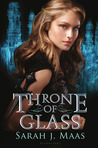
Review: "Throne of Glass" by Sarah J. Maas
Throne of Glass by Sarah J. MaasMy rating: 3 of 5 stars
I finally got to reading something from Sarah J. Maas after hearing about it A LOT in YouTube/BookTube circles. I get the sense that Sarah J. Maas' works are like Generation Z's Harry Potter. Either that, or she is very well marketed. I'm all for anything that gets teenagers reading!
As far as the book goes, it was fine! I borrowed it from my local library, and when I returned it, I also checked out the next two books in this series. I didn't find it terribly believable that a bitter, tough-as-nails assassin would be grinning at boys and kissing the prince (whose father, the king, is a horrible oppressive dictator) and fawning over dresses within a few chapters. I'm concerned for her mental health! As far as I can see, it's a fairly common criticism of this book.
I liked that the book answers enough about the world, but leaves enough mystery for further installments.
View all my reviews
Monday, October 16, 2017
Review: "Dragon Dreams" by Ava Richardson
![]() |
| This week, I read a fantasy adventure novel "Dragon Dreams" by Ava Richardson. |
My rating: 4 of 5 stars
Dragon Dreams was the second book from Ava Richardson’s First Dragon Rider series. I received this book as a ready-to-read from NetGalley. It’s free on Kindle Unlimited and $2.99 as a Kindle eBook, and will be released on Nov. 1.
The three-part story follows a mage, Char, her dragonrider friend, Neill, and their dragon friend, Paxala.
The book starts out with Neill and Char trying to remove dragon eggs from their nests. Neill and Char don’t want the young dragons to grow up under the evil influence of Zaxx, an ancient, mean, gold dragon. Their venture fails, and they’re back at the monastery, with Char learning how to wield magic.
Soon after, Char is called back to her father’s home. When she returns and he learns that she’s friends with a dragon, he tries to cajole her into using Paxala to defeat his enemies. Three kingdoms are at war with each other, and he gives her an ultimatum: to either use the dragon in war or marry a warlord.
Neill soon shows up with a quest to find a magnificent crown in Char’s family’s home. The two sneak into a boarded-up part of the castle in the dead of night, and find out that there’s a much more sinister side to dragon magic.
This book was a fine read on its own, despite it being the second in a series. I’ve never read any books from Ava Richardson before, but I came to discover she has multiple books, presumably taking place in the same world. “Dragon Dreams” felt like a sliver of a much larger world, but I was given enough exposition to understand what was going on. I caught strong hints of Christopher Paolini’s “Eragon” saga from this book, so if you liked “Eragon,” you’ll like this book.
I really loved the sense of adventure contained in the book, but I could have used more depth from the characters. More of Char and Neill’s personalities and motivations were likely fleshed out in the first book, so I was willing to overlook that small flaw. I also was confused as to whether or not there was romantic tension between Neill and Char. The book description described Neill as Char’s “love,” but I didn’t get the sense that there was anything more than friendship between the two.
Themes of empathy and understanding are woven into the narrative. Overall, I appreciated the good-versus-evil plotline, where the bad guys had little respect for life and living things and the good guys fought for a peaceful world and better understanding between those who are different.
Find more book reviews on carynsbeachreads.blogspot.com.
View all my reviews
Subscribe to:
Posts (Atom)
"Mediocre" is a good addition to your anti-racist readings
This past weekend, I finished "Mediocre: The Dangerous Legacy of White Male America" by Ijeoma Oluo. I have not read her first boo...
-
I have a pile of four books to review for the San Francisco Book Review right now. Also, I want to read Jeff VanderMeer's Southern Reach...
-
Step up your game, Caryn! Since my work is changing spaces, I've been working from home, which forces me to get out and explore my ...
-
What are these letters? In 2020, during the coronavirus pandemic, I listened to some of the Wheel of Time series on audiobook and wrote lett...