So, super cool of Neil Gaiman to retweet me last month. That was wild. Hello, new readers. Glad to hear you liked "The Unwritten" as much as I did! And "American Gods," of course.
Hurricane Dorian is banging down my door, and here I am writing about books. You know, the usual.
8. Shatter Me by Tahereh Mafi: This was the first book I did not finish this year because it was just so awful. It was supposed to be YA dystopian romance. The thing I find most interesting about dystopian novels is… well, the dystopia. Good or bad, I’m curious about how authors construct their dystopian society. For this one, it seemed the flimsy setting was wrapped around an even flimsier love triangle. I wasn’t into the bizarre, stream-of-consciousness whiny garbage with weird strikethrough text that's supposed to reveal the trembling inner heart of the main character. And I don’t care how pretty the covers are, they will not tempt me into reading the rest of this series.
7. Ender’s Game by Orson Scott Card: I picked away at this book for MONTHS and I had A LOT of feelings about it. I didn’t know if I would finish it, either! First, the good: I appreciated how it seemed to predict the way anonymous bots dictate the social discourse online. The bad: I felt like Valentine got the shaft when she was one of the most brilliant characters in the book. She was called upon to nudge Ender (who got chance after chance to be brilliant and failed) in the right direction like a glorified door opener. She was forced to retire her online persona at the end because of reasons. I hated the way Valentine was treated! Her story was more interesting than whatever Ender was doing! The ugly: Orson Scott Card is a raging homophobe (it’s well documented, I’m not going to Google it for you, we’re all adults) and I don’t need that regressive nonsense all up in my sci-fi, thanks.
6. Umami Bomb: 75 Vegetarian Recipes That Explode With Flavor by Raquel Pelzel: I got a copy of this cookbook on NetGalley, and the food photography is so beautiful, but I could have used some more of it! I’m eager to try some of the recipes. Meat eaters who are interested in reducing their carbon footprint through diet would enjoy this book to help transition to vegetarianism. It has a recipe for breakfast spaghetti, for crying out loud! Who wouldn't want to eat spaghetti for breakfast?
5. When Dimple Met Rishi by Sandhya Menon: This YA romance was constructed like a romantic comedy, and I really enjoyed listening to an audiobook of it. The awkwardness of young love made me giggle. Some of the parts where the heroes were teenager-petty made me cringe a bit. I was pleased it had a happy ending.
4. I Kill Giants by Joe Kelly: This graphic novel was recommended to me when I visited a comic book store in April in Philadelphia. It reminded me a lot of the movie plot of “A Monster Calls” by Patrick Ness (I want to read the book, but I haven’t yet, whoops) with a hint of “Bridge to Terabithia” by Katherine Paterson, which you know we all read and cried over around fourth grade or so.
3. The Dungeons & Dragons Player’s Handbook (5th Edition) by James Wyatt, Robert J. Schwalb and Bruce R. Cordell: I was going to write my lengthy backstory about how I’ve wanted to learn how to play D&D for more than a decade, but that’s a lot less exciting than the lengthy backstory of my very first D&D character. Since this is "Caryn's Beach Reads" and not "Caryn's Elaborately Constructed D&D Characters," we won't get into it on this blog (yet.)
2. A Cosmology of Monsters by Shaun Hamill: This is a very surprising debut book that actually comes out later this month. I read an advance copy of it, and it’s very creepy in time for fall and Halloween! If you like cosmic horror, check it out (or I’ll lend you my copy.)
1. Circe by Madeline Miller: This was the empowering story about the ancient Greek demigoddess and sorceress, Circe, who lived on one of the islands Odysseus visited in “The Odyssey.” It's an older book that I'm pretty sure everyone has read already. I'm just late to the party. I listened to the audiobook, and the woman who narrates it has a lovely speaking voice. The writing was just gorgeous. I was a little weirded out by the ending, but I appreciated some of the themes.
I’m 6 books behind my 200-book goal at this time of the year, according to Goodreads. Better step it up, Caryn, or you’ll never make your goal!
Showing posts with label Young Adult. Show all posts
Sunday, September 1, 2019
Thursday, May 30, 2019
The 14+ books I read in May, ranked
Well this month I did some traveling and had some extra time off work to pick up books that I've been meaning to read for a while that I just haven't. Some of these have much older publication dates. I lightened my reading load with City Book Review and got to work on a massive pile of library books and other unread literature that was flopping around my house.
14.) “The Strain, Volume 1” by David Lapham, Mike Huddleston and Sierra Hahn: This was a graphic novel adaptation of Guillermo del Toro and Chuck Hogan’s “The Strain,” in which a mysterious disease turns people into zombie/alien/vampires. The art was kind of generic and the story wasn’t that great. I would have much rather read the novel itself.
13.) “Fear” by Bob Woodward: I did not have the best attitude going into this book, but it’s not because of what you might think. For one, I’m not a huge nonfiction person. Since I work at a news organization, I get more than my fair share of nonfiction regularly. Second, I don’t like current event books in particular because they’re out of date within months. Just read the news if you want current events. (SUBSCRIBE TO YOUR LOCAL PAPER!) The third thing I didn’t enjoy about this book was that none of it was surprising, but it wasn’t really out to change anyone’s mind. If you dislike how the current administration is handling other countries’ leaders, you won’t be surprised to hear that according to the people interviewed in the book, the president approaches foreign policy with all of the sleek subtlety of a sledgehammer. If you’re a Trump supporter, you’ll chalk it up to “fake news” and not read it anyway. I read it because Bob Woodward is a respected journalist and I was interested in what he found in his research. I won’t make the mistake of reading a book like this again.
12.) “Ash Princess” by Laura Sebastian: I couldn't help but think the objective around this book was to construct a love triangle and every other plot element was just fodder to wrap around the heroine and her two love interests. I got the same vibes as when I read Victoria Aveyard's "Red Queen" last year. The indiscriminately evil despot was just a McGuffin, and the ultimate goal was pretty dresses and forbidden kissing. I’d really be interested in a more solid motivation for the big bad, and I think YA readers deserve more from their stories.
11.) “Protect the Prince” by Jennifer Estep: I had mostly enjoyed the first book in this series, but I found this second installment to be insufferable, mostly because the main character had somehow grown whiny and ill-tempered in between books. Somehow I was supposed to care that people were trying to kill her. I did not care.
10.) “The Call of Cthulhu” by H.P. Lovecraft: This is a short story written during a time when it was perfectly acceptable to be blindingly, unabashedly racist. Lovecraft was one of those science-y racists who seemed to rank people’s intelligence based on skin color. “The Call of Cthulhu” is about a man who investigates a cult that worships an old god, Cthulhu. Cthulhu has fallen to earth from the stars and lives in a cave in the Pacific Ocean. He’s grotesque and smelly and the people who encounter him go mad with terror. The prose itself was beautiful, and reminded me of works written about the same time, such as Joseph Conrad’s “Heart of Darkness” and Charlotte Bronte’s “Jane Eyre.” There’s the same theme of unknown malevolence that binds together all of those works in my mind. If you want to read some gothy old stuff, pick up one of these books. If you’re looking for cosmic horror, specifically, go somewhere else because The Call of Cthulhu’s narrative foundations are preposterously racist.
9.) “Harold in the Name of Love” by Chris Malone: This is the part of my list that begins the varying shades of good books I read in May. This indie book pleasantly surprised me. A former coworker, Hafiz, sent his author friend Chris my way for a book review, and I enjoyed it! This book had a lot to say about love, loss and moving on. Nancy’s character was just a little one-dimensional. She could have used a little more development. After I wrote my review on Goodreads, Chris tweeted, “Nancy was a tough character to crack, and given 100 more opportunities, I still don't think I'd ever get it right.” I think the biggest thing with Nancy was that she didn’t seem to evolve as a person over time, while Harold and Damon, the other two major characters, changed dramatically. I really loved how the friendship between Harold and Damon blossomed. It was a solid and unique plot with some dark comedic moments. Initially I was reminded of Fredrik Backman’s “A Man Called Ove,” but this was a much different story. I would recommend reading it.
8.) “Black Panther: A Nation Under Our Feet” by Ta-Nehisi Coates: This volume had a lot of plot threads that took some getting used to. I want to read the second volume to try to tie some of them together in my mind. The more I read volumes of comic books, the more I’m realizing that one volume that encompasses about five issues isn’t really ever enough to form an opinion on the series. There have only been a few exceptions to this.
7.) “Once & Future” by Amy Rose Capetta and Cori McCarthy: This is a gender-bending sci-fi retelling of Arthurian legend. Happy Pride Month! The premise is that King Arthur is regenerated every so often to write the wrongs of humanity. This time around, the evil Mercer Corporation has monetized almost every facet of the galaxy, and only two planets are in revolt. Merlin, who ages in reverse through the years, comes back as a teenager to help the first female King Arthur, Ari, defeat evil for good. This book has hints of Doctor Who and Star Wars!!! I read Thomas Malory’s Le Morte D’Arthur in high school, and OF COURSE it was, dry, boring, heteronormative and patriarchal! It was written in the 1400s! Sometimes I think retellings like this are made only partly to drum up interest in the source material among teens. In this case, I’d rather be reading this book. You should experience at least a detailed synopsis of Arthurian legend because its plots and themes are a foundation for A LOT of literature through the ages.
6.) “The Kiss Quotient” by Helen Hoang: This is a romance novel about how a woman with Autism Spectrum Disorder finds love by calling up an escort service to learn about sex and romantic relationships. It won a Goodreads Choice award for romance in 2018. I don’t read a lot of romance novels anymore (this is the first I’ve read in a while,) but I thought this was funny and romantic! One of the tropes in romance is that either one or both of the main characters are so disgustingly wealthy that they never have to worry about money throughout the course of the story. I think it helps to keep the focus on the development of the romance. Anyway, in this story, the heroine, Stella, as a dorky econometrician, is the breadwinner in the relationship, and I found that empowering. The other heroine in this story is Carly Robins, the woman who read the audiobook I listened to.
5.) “Shadow and Bone” and “Siege and Storm” by Leigh Bardugo: After the first book in this trilogy, I was interested in exploring this world more. The main character, Alina, finds out she’s a sun summoner, and that The Darkling wants to harness her power to widen the Shadow Fold and bring the adjacent countries to heel. I was late to the party on this, as Bardugo has several books now that are built in this universe, affectionately called “The Grishaverse,” and YA Twitter seems to really like it. I liked “Shadow and Bone” much better than “Siege and Storm,” as the second book had the sophomoric tendency to drag just a bit.
4.) “Uprooted” by Naomi Novik: At first glance, I thought this book was going to be a “Beauty and the Beast” retelling, but it goes so far beyond that and makes itself into something entirely fresh and new. “Uprooted” has hints of Russian fairy tales, but also a dollop of “Stranger Things.” I felt the heroine, Agnieszka, was empowering, considering her circumstances. The way magic is portrayed in this book is really cool. Right now I'm reading Novik's other book, "Spinning Silver," that has been nominated for Hugo and Nebula awards this year. It is very good so far.
3.) “Parable of the Sower” by Octavia E. Butler: This part of the list until the end is MANDATORY READING. We're all going to check back with each other at the end of next month to make sure we've read everything, right? HOLY MACARONI. This book was published in 1993 and takes place in 2025. I picked it up from the library because I heard there are some similarities between Butler’s writing and NK Jemisin’s writing. Parable of the Sower just blew my mind. It’s the diary of a teenage girl, Lauren Olamina, written over 3 years in a post-apocalyptic America. It’s supposed to be a bleak look at a near-future, but it includes themes of a drug crisis, global warming and extreme privatization of resources that are too close to reality today than mere hyperbole. The survivalist plot is super violent and visceral. How did I go so long without reading this?
2.) “The Sandman” by Neil Gaiman (Vols. 1-10): I wrote about my experience reading one of the greatest comic book series of all time here. The separate post is mainly to spare you from having to scroll through all of my truly insufferable literature snob thoughts about it. They are embarrassingly dorky, and I could have said much, much more. Halfway through May, this was the best book (errr, collection of books) I had read, and I thought it would stay that way, but it was overcome by…
1.) “Space Opera” by Catherynne M. Valente: This book is so earnestly joyful and dire at the same time. The author drew inspiration from Douglas Adams, David Bowie and Eurovision, and improves on all of it. If you’re one of those book snobs who think a writer’s style only belongs to them and no one can imitate it, you might take it personally that this novel has strong whiffs of “Hitchhiker’s Guide to the Galaxy.” I think the added themes of corruption, gentrification and modern-day corporatization freshens the Adams random sense of humor into something more coherent, enduring and meaningful.
Road to 200
According to Goodreads, I finished my 100th book this month. It’s a little deceptive because that counts five single issues of “Die” by Kieron Gillen and seven single issues of “Captain America” by Ta-Nehisi Coates from earlier in the year. I read them both twice. Still, if those two things were lumped into books on their own, I’d still be hovering around 90 books, and that’s nothing to sneeze at, I suppose. How did I get there? I've tried to either listen to an hour of an audio book OR read 150 pages of a book every day. My commute to work alone is about 30 minutes long, so it hasn't been difficult to do.
My favorite book podcast
Here's a link to my favorite book podcast, "372 pages we'll never get back." It's hosted by Conor Lastowka and Michael J. Nelson from MST3K and Rifftrax. They pick books they anticipate they won't like and make fun of them. Beyond the usual roasting, they write skits, respond to reader feedback, hold meme contests and other general silliness. Their first episodes were about "Ready Player One," one of my least favorite books, and right now they're reading "The Mister" by E.L. James. It's funny and enlightening to hear two men talk about their experiences reading their first romance novel.
Do you have a favorite book podcast?
![]() |
| Mmmm, look at all of those dark covers. I love how "Once & Future" and "Space Opera" had similar color schemes. Maybe I should write a post comparing them? |
14.) “The Strain, Volume 1” by David Lapham, Mike Huddleston and Sierra Hahn: This was a graphic novel adaptation of Guillermo del Toro and Chuck Hogan’s “The Strain,” in which a mysterious disease turns people into zombie/alien/vampires. The art was kind of generic and the story wasn’t that great. I would have much rather read the novel itself.
13.) “Fear” by Bob Woodward: I did not have the best attitude going into this book, but it’s not because of what you might think. For one, I’m not a huge nonfiction person. Since I work at a news organization, I get more than my fair share of nonfiction regularly. Second, I don’t like current event books in particular because they’re out of date within months. Just read the news if you want current events. (SUBSCRIBE TO YOUR LOCAL PAPER!) The third thing I didn’t enjoy about this book was that none of it was surprising, but it wasn’t really out to change anyone’s mind. If you dislike how the current administration is handling other countries’ leaders, you won’t be surprised to hear that according to the people interviewed in the book, the president approaches foreign policy with all of the sleek subtlety of a sledgehammer. If you’re a Trump supporter, you’ll chalk it up to “fake news” and not read it anyway. I read it because Bob Woodward is a respected journalist and I was interested in what he found in his research. I won’t make the mistake of reading a book like this again.
12.) “Ash Princess” by Laura Sebastian: I couldn't help but think the objective around this book was to construct a love triangle and every other plot element was just fodder to wrap around the heroine and her two love interests. I got the same vibes as when I read Victoria Aveyard's "Red Queen" last year. The indiscriminately evil despot was just a McGuffin, and the ultimate goal was pretty dresses and forbidden kissing. I’d really be interested in a more solid motivation for the big bad, and I think YA readers deserve more from their stories.
11.) “Protect the Prince” by Jennifer Estep: I had mostly enjoyed the first book in this series, but I found this second installment to be insufferable, mostly because the main character had somehow grown whiny and ill-tempered in between books. Somehow I was supposed to care that people were trying to kill her. I did not care.
10.) “The Call of Cthulhu” by H.P. Lovecraft: This is a short story written during a time when it was perfectly acceptable to be blindingly, unabashedly racist. Lovecraft was one of those science-y racists who seemed to rank people’s intelligence based on skin color. “The Call of Cthulhu” is about a man who investigates a cult that worships an old god, Cthulhu. Cthulhu has fallen to earth from the stars and lives in a cave in the Pacific Ocean. He’s grotesque and smelly and the people who encounter him go mad with terror. The prose itself was beautiful, and reminded me of works written about the same time, such as Joseph Conrad’s “Heart of Darkness” and Charlotte Bronte’s “Jane Eyre.” There’s the same theme of unknown malevolence that binds together all of those works in my mind. If you want to read some gothy old stuff, pick up one of these books. If you’re looking for cosmic horror, specifically, go somewhere else because The Call of Cthulhu’s narrative foundations are preposterously racist.
9.) “Harold in the Name of Love” by Chris Malone: This is the part of my list that begins the varying shades of good books I read in May. This indie book pleasantly surprised me. A former coworker, Hafiz, sent his author friend Chris my way for a book review, and I enjoyed it! This book had a lot to say about love, loss and moving on. Nancy’s character was just a little one-dimensional. She could have used a little more development. After I wrote my review on Goodreads, Chris tweeted, “Nancy was a tough character to crack, and given 100 more opportunities, I still don't think I'd ever get it right.” I think the biggest thing with Nancy was that she didn’t seem to evolve as a person over time, while Harold and Damon, the other two major characters, changed dramatically. I really loved how the friendship between Harold and Damon blossomed. It was a solid and unique plot with some dark comedic moments. Initially I was reminded of Fredrik Backman’s “A Man Called Ove,” but this was a much different story. I would recommend reading it.
8.) “Black Panther: A Nation Under Our Feet” by Ta-Nehisi Coates: This volume had a lot of plot threads that took some getting used to. I want to read the second volume to try to tie some of them together in my mind. The more I read volumes of comic books, the more I’m realizing that one volume that encompasses about five issues isn’t really ever enough to form an opinion on the series. There have only been a few exceptions to this.
7.) “Once & Future” by Amy Rose Capetta and Cori McCarthy: This is a gender-bending sci-fi retelling of Arthurian legend. Happy Pride Month! The premise is that King Arthur is regenerated every so often to write the wrongs of humanity. This time around, the evil Mercer Corporation has monetized almost every facet of the galaxy, and only two planets are in revolt. Merlin, who ages in reverse through the years, comes back as a teenager to help the first female King Arthur, Ari, defeat evil for good. This book has hints of Doctor Who and Star Wars!!! I read Thomas Malory’s Le Morte D’Arthur in high school, and OF COURSE it was, dry, boring, heteronormative and patriarchal! It was written in the 1400s! Sometimes I think retellings like this are made only partly to drum up interest in the source material among teens. In this case, I’d rather be reading this book. You should experience at least a detailed synopsis of Arthurian legend because its plots and themes are a foundation for A LOT of literature through the ages.
6.) “The Kiss Quotient” by Helen Hoang: This is a romance novel about how a woman with Autism Spectrum Disorder finds love by calling up an escort service to learn about sex and romantic relationships. It won a Goodreads Choice award for romance in 2018. I don’t read a lot of romance novels anymore (this is the first I’ve read in a while,) but I thought this was funny and romantic! One of the tropes in romance is that either one or both of the main characters are so disgustingly wealthy that they never have to worry about money throughout the course of the story. I think it helps to keep the focus on the development of the romance. Anyway, in this story, the heroine, Stella, as a dorky econometrician, is the breadwinner in the relationship, and I found that empowering. The other heroine in this story is Carly Robins, the woman who read the audiobook I listened to.
5.) “Shadow and Bone” and “Siege and Storm” by Leigh Bardugo: After the first book in this trilogy, I was interested in exploring this world more. The main character, Alina, finds out she’s a sun summoner, and that The Darkling wants to harness her power to widen the Shadow Fold and bring the adjacent countries to heel. I was late to the party on this, as Bardugo has several books now that are built in this universe, affectionately called “The Grishaverse,” and YA Twitter seems to really like it. I liked “Shadow and Bone” much better than “Siege and Storm,” as the second book had the sophomoric tendency to drag just a bit.
4.) “Uprooted” by Naomi Novik: At first glance, I thought this book was going to be a “Beauty and the Beast” retelling, but it goes so far beyond that and makes itself into something entirely fresh and new. “Uprooted” has hints of Russian fairy tales, but also a dollop of “Stranger Things.” I felt the heroine, Agnieszka, was empowering, considering her circumstances. The way magic is portrayed in this book is really cool. Right now I'm reading Novik's other book, "Spinning Silver," that has been nominated for Hugo and Nebula awards this year. It is very good so far.
3.) “Parable of the Sower” by Octavia E. Butler: This part of the list until the end is MANDATORY READING. We're all going to check back with each other at the end of next month to make sure we've read everything, right? HOLY MACARONI. This book was published in 1993 and takes place in 2025. I picked it up from the library because I heard there are some similarities between Butler’s writing and NK Jemisin’s writing. Parable of the Sower just blew my mind. It’s the diary of a teenage girl, Lauren Olamina, written over 3 years in a post-apocalyptic America. It’s supposed to be a bleak look at a near-future, but it includes themes of a drug crisis, global warming and extreme privatization of resources that are too close to reality today than mere hyperbole. The survivalist plot is super violent and visceral. How did I go so long without reading this?
2.) “The Sandman” by Neil Gaiman (Vols. 1-10): I wrote about my experience reading one of the greatest comic book series of all time here. The separate post is mainly to spare you from having to scroll through all of my truly insufferable literature snob thoughts about it. They are embarrassingly dorky, and I could have said much, much more. Halfway through May, this was the best book (errr, collection of books) I had read, and I thought it would stay that way, but it was overcome by…
1.) “Space Opera” by Catherynne M. Valente: This book is so earnestly joyful and dire at the same time. The author drew inspiration from Douglas Adams, David Bowie and Eurovision, and improves on all of it. If you’re one of those book snobs who think a writer’s style only belongs to them and no one can imitate it, you might take it personally that this novel has strong whiffs of “Hitchhiker’s Guide to the Galaxy.” I think the added themes of corruption, gentrification and modern-day corporatization freshens the Adams random sense of humor into something more coherent, enduring and meaningful.
Road to 200
According to Goodreads, I finished my 100th book this month. It’s a little deceptive because that counts five single issues of “Die” by Kieron Gillen and seven single issues of “Captain America” by Ta-Nehisi Coates from earlier in the year. I read them both twice. Still, if those two things were lumped into books on their own, I’d still be hovering around 90 books, and that’s nothing to sneeze at, I suppose. How did I get there? I've tried to either listen to an hour of an audio book OR read 150 pages of a book every day. My commute to work alone is about 30 minutes long, so it hasn't been difficult to do.
My favorite book podcast
Here's a link to my favorite book podcast, "372 pages we'll never get back." It's hosted by Conor Lastowka and Michael J. Nelson from MST3K and Rifftrax. They pick books they anticipate they won't like and make fun of them. Beyond the usual roasting, they write skits, respond to reader feedback, hold meme contests and other general silliness. Their first episodes were about "Ready Player One," one of my least favorite books, and right now they're reading "The Mister" by E.L. James. It's funny and enlightening to hear two men talk about their experiences reading their first romance novel.
Do you have a favorite book podcast?
Sunday, March 31, 2019
The 16+ books I read in March, ranked.
I didn't read quite as many books as last month, but the books I did read were weightier.
16.) Black Leopard, Red Wolf by Marlon James: I wrote a “good, bad and ugly” post on this book, and I’d rather not talk about it again. It sucked the impact out of every other violent thing I read for two months. This was the only truly intolerable book I finished this month. The marketing for this book was absolute scorched earth, and I was shocked to see The Mary Sue, a site for nerd culture for women, advertising this book on Twitter when the narrative is so brutal toward women.
The rest of the books on this list are just splitting hairs over various degrees of goodness and what I happen to be in the mood to read at any given moment.
15.) In The Woods by Tana French: This was a recommendation from my friend Abby during The Great Book Slump of 2018. She said she liked the storyline. My mom read it, too, and said it was "creepy." It was a methodical murder mystery where every detective got drunk and didn't do a great job... doing their job. The murder was eventually solved, but the story didn't grip me immediately. I think it had something to do with the sleazy detective telling the story. I wasn't crazy about him. I don't normally gravitate toward murder mysteries, either. I appreciated reaching for something that was outside of my comfort zone, though!
14.) Cress by Marissa Meyer: Last month, I read “Scarlet,” the second installment in this saga, and this month, I listened to “Cress” on audiobook with my Libby app. It’s Rapunzel… IN SPAAAAAAACE! This book was very emotional, with Crescent (Rapunzel) falling in love with Thorne (kind of a Han Solo type of guy) and having to survive a desert and make it to civilization after her surveillance satellite crashes to earth. I loved it.
13.) Jessica Jones: The Pulse: The Complete Collection by Brian Michael Bendis: I was going to group Alias and The Pulse in the same entry, but The Pulse was so markedly different in tone and content, that I decided to split them up. The Pulse focuses on a press initiative by J. Jonah Jameson of The Daily Bugle to cover the lives of superheroes in the city. Also, it focuses on Jessica and Luke Cage's relationship. It's not as dark as Alias was, and parts of it had crispy, clear art, as opposed to the watery, moody art of Alias. Jessica's personality was really different, too, and not in a good way. I was not as impressed with this iteration of Jessica Jones, and I got the sense that the writers didn't seem to know what to do with her, but she's still my favorite superhero.
12.) The Name of the Wind by Patrick Rothfuss: I enjoyed this book for its deep mythos, world building and setting, magical mechanics, and entertaining characters. I’ve already started the second book, "The Wise Man's Fear" in this unfinished trilogy. It reminded me a lot of the writings from one of my favorite fantasy authors, Robin Hobb. I did not enjoy it for its benevolent sexism and casual ill treatment of women. As insurmountable an obstacle it might seem, it is not difficult for men to regard and speak to women like they are equals and real human beings. When women are treated as others, and not seen as people, it is a stepping stone for them to be mistreated more cruelly elsewhere in literature and in real life.
11.) House of Salt and Sorrows by Erin A. Craig: I received this book from NetGalley and wrote a review of it, and my feelings about fairy tale retellings, here. This was awfully dark, but really quite good.
10.) All The Light We Cannot See by Anthony Doerr: This book was very well written, but since historical fiction isn’t really my thing, it’s farther down on the list than might be comfortable for some people. It won a Pulitzer Prize in Fiction in 2015. I felt like this book was a little too compassionate to Nazis, especially in the current political climate, which I wrote about here.
9.) Captain Marvel: In Pursuit of Flight by Kelly Sue DeConnick: I read this ahead of the movie to get a sense of what Captain Marvel was all about. The greatest joy I derived from a dour fan who wrote after Issue 2 that he was sad he couldn’t drool over a nonautonomous lady in a swimsuit anymore (this is a vast oversimplification of the tone of his message, which was straight sexist trash garbage.) After subsequent issues, Captain Marvel fans raked him over the coals. I didn’t just like this book, but I loved the Captain Marvel movie. It’s taken time, but Marvel movies have grown on me. I think they just needed to grow beyond origin stories and the subsequent “Do we really need superheroes?” conversations to evolve into something deeper.
8.) "Die"(the first four issues) by Kieron Gillen: I found this series on one of those “100 NEW BOOKS YOU NEED TO READ YESTERDAY” listicles. The easiest way to describe this series is that it’s a cross between Jumanji and D&D. There’s a healthy dose of darkness, adulthood trauma and Lord of the Rings references, which is always a plus. I feel like the first four issues said a lot, but I need to spend more time in the universe to get a feel for whether I like it or not. It seems promising. The compilation of a handful of issues comes out in June, if you prefer that format. I read the first four issues and pre-ordered the fifth.
7.) Sharp Objects by Gillian Flynn: Nope, I didn’t have nightmares after reading this, not me! I read Flynn’s “Gone Girl” a couple years ago, which was ultra creepy, but Sharp Objects was even more disturbing. I must have been in the mood for a creepy story, because this one left me dazed and enthralled. I'm going to have nightmares about missing teeth for the next month. I read it because I was curious about the HBO series that was based on this book. The themes reminded me of the real-life news story where a girl planned the death of her mother because she was the victim of Munchausen by proxy.
6.) Americanah by Chimamanda Ngozi Adichie: This book is about a Nigerian woman, Ifemelu, who moves to America, lives there for a while, and then moves back to Nigeria. This book was A LOT in the very best way. It had a lot of the same conceits as Ta-Nehisi Coates’ “We Were Eight Years In Power” (see below,) but also it had a fictional story that covered all the nuances between being African-black and Non-African-black and made observations about racism in America through Ifemelu’s blog posts. On top of all that, it had a romantic story arc that reminded me of something straight out of Jane Austen’s “Persuasion,” only modernized of course. There was a quote in there about how the word “nuance” is just code for making white people comfortable, ("Nuance means keep people comfortable so everyone is free to think of themselves as individuals and everyone got where they are because of their achievement.") but I felt this book was nuanced in the sense that it gave me more information about the subtleties between black people in a very clear way.
Here’s another quote from “Americanah" that I felt was really pointed:
5.) Saga Vols. 7-9 by Brian K. Vaughan and Fiona Staples: Hazel’s monologue at the end of Vol. 7 got me right in the feels. I’m only a little disappointed that the series seems to have backed off the role of the romance novel in causing unrest. The end of Vol. 9 was a big surprise in the most tragic way, but I’m not necessarily buying it. I mean, if The Will is alive to mess things up for the good guys, this most recent development doesn’t really hold, does it? I have hope. And no, I won’t spoil it.
4.) The Vision (Two volumes: “Little Worse Than A Man” and “Little Better Than A Beast”) by Tom King: This story was heartbreaking, but I really loved how it married the superhuman and mundane. It’s difficult to describe, but watching Vision’s family, who are invincible, work through common domestic issues, was the most interesting. If I were a habitual re-reader, I’d probably read this again.
3.) How Long Til Black Future Month by N.K. Jemisin: I got some Black Mirror vibes, whiffs of fairy tales, and some sharp, calculated social commentary from these short stories. In one of the stories, a king eats the heart of a dragon and learns about the folly of taking and using power that isn’t his. Another one is a “proof of concept” story from the Broken Earth trilogy (my FAVORITE books.) One peculiar tale is called “L’Alchimista,” which is about a demon who plays “Chopped” with a chef. He gives her a sack of weird ingredients, and she makes him food. The way the food is described is the way I talk about books sometimes, which is why I found it charming. Some of these stories were perfect vignettes, but I hope Jemisin uses others as a foundation for a new trilogy because I wanted to know more.
2.) Jessica Jones: Alias Vols. 3 and 4 by Brian Michael Bendis: Jessica Jones is my favorite Marvel superhero because you don’t have to look too hard to find real life in her. I watched the Netflix series first, and I was instantly in love. I read Vol. 1 and 2 of Alias about a year ago, and just got 3 and 4 recently. There’s so much to like about this series: There are illustrative comedic bits where Jessica listens to her clients impassively. She’s dating Ant-Man, the Avengers make appearances and her best friend is a pre-redesign Carol Danvers (Captain Marvel swimsuit-ogglers, eat your heart out.) Her struggle with the Purple Man doesn’t happen until Vol. 4, and I was a little disappointed at how it was resolved compared to how Jessica "defeats" Kilgrave in the Netflix series. (It was still good! No spoilers here.) I’m still drawn to the way Jessica Jones perfectly illustrates how it feels to be in an emotionally abusive relationship (especially the self-blame, the struggle to get out, and people not believing/seeing what you’re seeing.)
1.) We Were Eight Years In Power by Ta-Nehisi Coates: A Facebook post about this book turned into a little mini book club and I was all about it. Good talk, friends. Anyway, this book deeply affected me. I’m not going to go on an anti-racism tirade here, but I have lots of feelings about Coates’ ideas and evaluating my own role in perpetuating white supremacy as a straight white lady, and then actually DOING SOMETHING about racism in America.
UNRANKED
Me and White Supremacy Workbook by Layla F. Saad: I’m not ranking this because it’s personal, and I'm not going to rank it on its literary merits. I'm only mentioning it because if you want to read it, it’s free and the author kindly sends emails about other resources you can use. I learned about this book in the midst of some racist things going on in the knitting community (and now the romance author community.) If you're a white person, you should read it to interrogate your own role in white supremacy privately.
YOU'LL SEE IT NEXT MONTH
Ash Princess by Laura Sebastian
Winter by Marissa Meyer
Shadow and Bone by Leigh Bardugo
The Wise Man’s Fear by Patrick Rothfuss
16.) Black Leopard, Red Wolf by Marlon James: I wrote a “good, bad and ugly” post on this book, and I’d rather not talk about it again. It sucked the impact out of every other violent thing I read for two months. This was the only truly intolerable book I finished this month. The marketing for this book was absolute scorched earth, and I was shocked to see The Mary Sue, a site for nerd culture for women, advertising this book on Twitter when the narrative is so brutal toward women.
The rest of the books on this list are just splitting hairs over various degrees of goodness and what I happen to be in the mood to read at any given moment.
15.) In The Woods by Tana French: This was a recommendation from my friend Abby during The Great Book Slump of 2018. She said she liked the storyline. My mom read it, too, and said it was "creepy." It was a methodical murder mystery where every detective got drunk and didn't do a great job... doing their job. The murder was eventually solved, but the story didn't grip me immediately. I think it had something to do with the sleazy detective telling the story. I wasn't crazy about him. I don't normally gravitate toward murder mysteries, either. I appreciated reaching for something that was outside of my comfort zone, though!
14.) Cress by Marissa Meyer: Last month, I read “Scarlet,” the second installment in this saga, and this month, I listened to “Cress” on audiobook with my Libby app. It’s Rapunzel… IN SPAAAAAAACE! This book was very emotional, with Crescent (Rapunzel) falling in love with Thorne (kind of a Han Solo type of guy) and having to survive a desert and make it to civilization after her surveillance satellite crashes to earth. I loved it.
13.) Jessica Jones: The Pulse: The Complete Collection by Brian Michael Bendis: I was going to group Alias and The Pulse in the same entry, but The Pulse was so markedly different in tone and content, that I decided to split them up. The Pulse focuses on a press initiative by J. Jonah Jameson of The Daily Bugle to cover the lives of superheroes in the city. Also, it focuses on Jessica and Luke Cage's relationship. It's not as dark as Alias was, and parts of it had crispy, clear art, as opposed to the watery, moody art of Alias. Jessica's personality was really different, too, and not in a good way. I was not as impressed with this iteration of Jessica Jones, and I got the sense that the writers didn't seem to know what to do with her, but she's still my favorite superhero.
12.) The Name of the Wind by Patrick Rothfuss: I enjoyed this book for its deep mythos, world building and setting, magical mechanics, and entertaining characters. I’ve already started the second book, "The Wise Man's Fear" in this unfinished trilogy. It reminded me a lot of the writings from one of my favorite fantasy authors, Robin Hobb. I did not enjoy it for its benevolent sexism and casual ill treatment of women. As insurmountable an obstacle it might seem, it is not difficult for men to regard and speak to women like they are equals and real human beings. When women are treated as others, and not seen as people, it is a stepping stone for them to be mistreated more cruelly elsewhere in literature and in real life.
11.) House of Salt and Sorrows by Erin A. Craig: I received this book from NetGalley and wrote a review of it, and my feelings about fairy tale retellings, here. This was awfully dark, but really quite good.
10.) All The Light We Cannot See by Anthony Doerr: This book was very well written, but since historical fiction isn’t really my thing, it’s farther down on the list than might be comfortable for some people. It won a Pulitzer Prize in Fiction in 2015. I felt like this book was a little too compassionate to Nazis, especially in the current political climate, which I wrote about here.
9.) Captain Marvel: In Pursuit of Flight by Kelly Sue DeConnick: I read this ahead of the movie to get a sense of what Captain Marvel was all about. The greatest joy I derived from a dour fan who wrote after Issue 2 that he was sad he couldn’t drool over a nonautonomous lady in a swimsuit anymore (this is a vast oversimplification of the tone of his message, which was straight sexist trash garbage.) After subsequent issues, Captain Marvel fans raked him over the coals. I didn’t just like this book, but I loved the Captain Marvel movie. It’s taken time, but Marvel movies have grown on me. I think they just needed to grow beyond origin stories and the subsequent “Do we really need superheroes?” conversations to evolve into something deeper.
8.) "Die"(the first four issues) by Kieron Gillen: I found this series on one of those “100 NEW BOOKS YOU NEED TO READ YESTERDAY” listicles. The easiest way to describe this series is that it’s a cross between Jumanji and D&D. There’s a healthy dose of darkness, adulthood trauma and Lord of the Rings references, which is always a plus. I feel like the first four issues said a lot, but I need to spend more time in the universe to get a feel for whether I like it or not. It seems promising. The compilation of a handful of issues comes out in June, if you prefer that format. I read the first four issues and pre-ordered the fifth.
7.) Sharp Objects by Gillian Flynn: Nope, I didn’t have nightmares after reading this, not me! I read Flynn’s “Gone Girl” a couple years ago, which was ultra creepy, but Sharp Objects was even more disturbing. I must have been in the mood for a creepy story, because this one left me dazed and enthralled. I'm going to have nightmares about missing teeth for the next month. I read it because I was curious about the HBO series that was based on this book. The themes reminded me of the real-life news story where a girl planned the death of her mother because she was the victim of Munchausen by proxy.
6.) Americanah by Chimamanda Ngozi Adichie: This book is about a Nigerian woman, Ifemelu, who moves to America, lives there for a while, and then moves back to Nigeria. This book was A LOT in the very best way. It had a lot of the same conceits as Ta-Nehisi Coates’ “We Were Eight Years In Power” (see below,) but also it had a fictional story that covered all the nuances between being African-black and Non-African-black and made observations about racism in America through Ifemelu’s blog posts. On top of all that, it had a romantic story arc that reminded me of something straight out of Jane Austen’s “Persuasion,” only modernized of course. There was a quote in there about how the word “nuance” is just code for making white people comfortable, ("Nuance means keep people comfortable so everyone is free to think of themselves as individuals and everyone got where they are because of their achievement.") but I felt this book was nuanced in the sense that it gave me more information about the subtleties between black people in a very clear way.
Here’s another quote from “Americanah" that I felt was really pointed:
“You can’t write an honest novel about race in this country. If you write about how people are really affected by race, it’ll be too obvious. Black writers who do literary fiction in this country, all three of them, not the ten thousand who write those bullshit ghetto books with the bright covers, have two choices: they can do precious or they can do pretentious. When you do neither, nobody knows what to do with you. So if you’re going to write about race, you have to make sure it’s so lyrical and subtle that the reader who doesn’t read between the lines won’t even know it’s about race. You know, a Proustian meditation, all watery and fuzzy, that at the end just leaves you feeling watery and fuzzy.”
5.) Saga Vols. 7-9 by Brian K. Vaughan and Fiona Staples: Hazel’s monologue at the end of Vol. 7 got me right in the feels. I’m only a little disappointed that the series seems to have backed off the role of the romance novel in causing unrest. The end of Vol. 9 was a big surprise in the most tragic way, but I’m not necessarily buying it. I mean, if The Will is alive to mess things up for the good guys, this most recent development doesn’t really hold, does it? I have hope. And no, I won’t spoil it.
4.) The Vision (Two volumes: “Little Worse Than A Man” and “Little Better Than A Beast”) by Tom King: This story was heartbreaking, but I really loved how it married the superhuman and mundane. It’s difficult to describe, but watching Vision’s family, who are invincible, work through common domestic issues, was the most interesting. If I were a habitual re-reader, I’d probably read this again.
3.) How Long Til Black Future Month by N.K. Jemisin: I got some Black Mirror vibes, whiffs of fairy tales, and some sharp, calculated social commentary from these short stories. In one of the stories, a king eats the heart of a dragon and learns about the folly of taking and using power that isn’t his. Another one is a “proof of concept” story from the Broken Earth trilogy (my FAVORITE books.) One peculiar tale is called “L’Alchimista,” which is about a demon who plays “Chopped” with a chef. He gives her a sack of weird ingredients, and she makes him food. The way the food is described is the way I talk about books sometimes, which is why I found it charming. Some of these stories were perfect vignettes, but I hope Jemisin uses others as a foundation for a new trilogy because I wanted to know more.
2.) Jessica Jones: Alias Vols. 3 and 4 by Brian Michael Bendis: Jessica Jones is my favorite Marvel superhero because you don’t have to look too hard to find real life in her. I watched the Netflix series first, and I was instantly in love. I read Vol. 1 and 2 of Alias about a year ago, and just got 3 and 4 recently. There’s so much to like about this series: There are illustrative comedic bits where Jessica listens to her clients impassively. She’s dating Ant-Man, the Avengers make appearances and her best friend is a pre-redesign Carol Danvers (Captain Marvel swimsuit-ogglers, eat your heart out.) Her struggle with the Purple Man doesn’t happen until Vol. 4, and I was a little disappointed at how it was resolved compared to how Jessica "defeats" Kilgrave in the Netflix series. (It was still good! No spoilers here.) I’m still drawn to the way Jessica Jones perfectly illustrates how it feels to be in an emotionally abusive relationship (especially the self-blame, the struggle to get out, and people not believing/seeing what you’re seeing.)
1.) We Were Eight Years In Power by Ta-Nehisi Coates: A Facebook post about this book turned into a little mini book club and I was all about it. Good talk, friends. Anyway, this book deeply affected me. I’m not going to go on an anti-racism tirade here, but I have lots of feelings about Coates’ ideas and evaluating my own role in perpetuating white supremacy as a straight white lady, and then actually DOING SOMETHING about racism in America.
UNRANKED
Me and White Supremacy Workbook by Layla F. Saad: I’m not ranking this because it’s personal, and I'm not going to rank it on its literary merits. I'm only mentioning it because if you want to read it, it’s free and the author kindly sends emails about other resources you can use. I learned about this book in the midst of some racist things going on in the knitting community (and now the romance author community.) If you're a white person, you should read it to interrogate your own role in white supremacy privately.
YOU'LL SEE IT NEXT MONTH
Ash Princess by Laura Sebastian
Winter by Marissa Meyer
Shadow and Bone by Leigh Bardugo
The Wise Man’s Fear by Patrick Rothfuss
Thursday, January 31, 2019
The 16 books I read in January, ranked
In January, I read 16 books. I grouped the books in series
together for expedience. Here are those books, ranked from worst to best:
![]() |
| January 2019's books, organized by color and not quality. |
13.) Kingdom on Fire
trilogy: “A Shadow Bright and Burning,” “A Poison Dark and Drowning,” “A Sorrow
Fierce and Falling” by Jessica Cluess: A mediocre trilogy that leaned much
too hard on older, better stories, which I thought about and wished I could
have been reading while I was reading these books. The story didn’t take risks
with characters, and there were too many secrets tied to too many flat characters early on for me to really care
when things were eventually revealed.
12.) “Tower of Dawn”
by Sarah J. Maas: I’ve been on the struggle bus with this series ever since
the 4th book (“Queen of Shadows.”) It should have been a trilogy,
but on it slogs. I’ll get to the last book eventually, but the relationship
dynamics of the series at large are super unappetizing. Like, “Twilight”-level
gross.
11.) “Snow White
Learns Witchcraft: Stories and Poems” by Theodora Goss: This was a funny
little disjointed collection of poems and short stories. I’m absolutely a sucker
for fairy tale retellings, but this one was a little out there for me.
10.) “Hidden Sun:
Shadowlands Book 1” by Jaine Fenn: I’ve been on a sci-fi/fantasy kick for a
couple months now. This one wasn’t what I was looking for. Ultimately
forgettable.
9.) “The Fever King”
by Victoria Lee: This was fine. It was about a virus that either kills the
people it infects or gives them magic powers. LGBTQIAP+ themes made it unique.
8.) “Put Your Best
Face Forward: The Ultimate Guide to Skincare from Acne to Anti-aging” by Sandra
Lee: This was a really interesting medical text that was watered down
enough for the regular person to understand. Only Sandra Lee with her Dr.Pimple Popper Youtube/TLC clout could pull this one off. I chose this to review
for the San Francisco Book Review because I heard good things about it. It was
fine, but it didn’t seem to know what kind of audience it was targeting: Dermatology students, or the average person who enjoys literally washing money down the drain via skincare?
7.) “Waisted” by
Randy Susan Meyers: I wrote more about this book earlier this month. This
also was fine.
6.) “The Beast’s
Heart,” by Leife Shallcross: Like I said, I’m a sucker for fairy tale
retellings. This one was a “Beauty and the Beast” retelling from the Beast’s
point of view. While things got a little creepy, it was a unique story because
it showed what Beauty/Isabeau’s family was doing without her. As it turns out,
they were actually better off!
5.) “Lovestruck” by
Kate Watson: This was a really cute book that draws on ancient Greek
mythology. It’s about an immortal teen girl named Kalixta who wants to be a
muse, but she’s stuck training as a cupid. I can imagine school librarians
recommending something like this to kids who are bored studying the Greek pantheon
in English class because I found it fun and relatable.
4.) “Exit Stage Left:
The Snagglepuss Chronicles” by Mark Russell: I am very happy that one of my
Facebook friends is trying to read a comic a week and write about it. (Hi
Robert!) I'm keeping an eye on this venture for a lot of reasons: I trust
his judgment/taste, I don’t read enough comics, I want to understand more about
comic books/graphic novels, and comics are a fun way to boost the amount of
books I read because they’re quick and I want to read at least 100 books this
year. A volume usually takes me about an hour. While “Exit Stage Left: The
Snagglepuss Chronicles” was set during the red scare in the 1950s, there were several thinly veiled references to the present day, which I always like. It was very sad, but I am very glad I read it.
3.) “Thor: God Of
Thunder Vol. 1: The God Butcher,” “Thor: God Of Thunder Vol. 2: Godbomb” by
Jason Aaron: These were both delightful, but I was apprehensive at first
because “The God Butcher” gave me “The Infinity Gauntlet” vibes, and I did not
like “The Infinity Gauntlet” at all. In “Godbomb,” (how can you NOT read a
comic book called “Godbomb?”) an evil, all-powerful alien guy named Gorr is
butchering all of the gods in the universe. He chops them up and throws them
into space where three Thors from three different time periods come across his
carnage and their ship is attacked by starsharks. It’s wild and very dramatic,
but the conclusion of the two books was kind of what I anticipated. Oddly, the
comics I read this month were the only books I read that were written by men.
Everything else was written by women. I’m hoping to keep it that way.
2.) “Coffeehouse
Knits” by Kerry Bogert: My one and only knitting book. The patterns and
essays were cute, but I prefer knitting patterns that are more difficult. I wrote about this book, and some of my favorite knitting books, here.
1.) “The Stone Sky”
by NK Jemisin: I started listening to Jemisin’s Broken Earth trilogy on
Audible last November. Where do I begin?
First of all, Jemisin’s Broken Earth trilogy won the Hugo
award for best novel three years in a row, and she’s the only author to have
done that. (“The Fifth Season” in 2016, “The Obelisk Gate” in 2017 and “The
Stone Sky” in 2018.) I grew SO ATTACHED to the characters in her books that I’m
still trying to get over them and I don’t think I can go on without them.
The world is just so beautiful and deep. The narrative spans
millennia and addresses themes of racism, prejudice, suffering, oppression,
environmentalism and survival. Part of it is written in second person, which
was unique and immersive. I felt like I was part of the story. I’ve never
read/listened to anything like it, and I don’t think I ever will again. The author herself seems like a certified badass.
There are a few, rare books I would call “vital reading.”
The last book I felt this way about was Angie Thomas’s “The Hate U Give.” But
you need to put down whatever you’re reading now and read this trilogy. It has
some important things to say.
Thursday, October 11, 2018
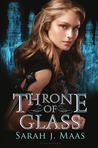
Review: "Throne of Glass" by Sarah J. Maas
Throne of Glass by Sarah J. MaasMy rating: 3 of 5 stars
I finally got to reading something from Sarah J. Maas after hearing about it A LOT in YouTube/BookTube circles. I get the sense that Sarah J. Maas' works are like Generation Z's Harry Potter. Either that, or she is very well marketed. I'm all for anything that gets teenagers reading!
As far as the book goes, it was fine! I borrowed it from my local library, and when I returned it, I also checked out the next two books in this series. I didn't find it terribly believable that a bitter, tough-as-nails assassin would be grinning at boys and kissing the prince (whose father, the king, is a horrible oppressive dictator) and fawning over dresses within a few chapters. I'm concerned for her mental health! As far as I can see, it's a fairly common criticism of this book.
I liked that the book answers enough about the world, but leaves enough mystery for further installments.
View all my reviews
Subscribe to:
Posts (Atom)
"Mediocre" is a good addition to your anti-racist readings
This past weekend, I finished "Mediocre: The Dangerous Legacy of White Male America" by Ijeoma Oluo. I have not read her first boo...
-
What are these letters? In 2020, during the coronavirus pandemic, I listened to some of the Wheel of Time series on audiobook and wrote lett...
-
“As people leave, they take a little of the warm glow of the evening home with them, a reminder that even when the world outside is unyiel...
-
Dear Robert, I'm about 12 hours from the end of Lord of Chaos and here's what's happening: Rand sends Mat to Salidar, along with...